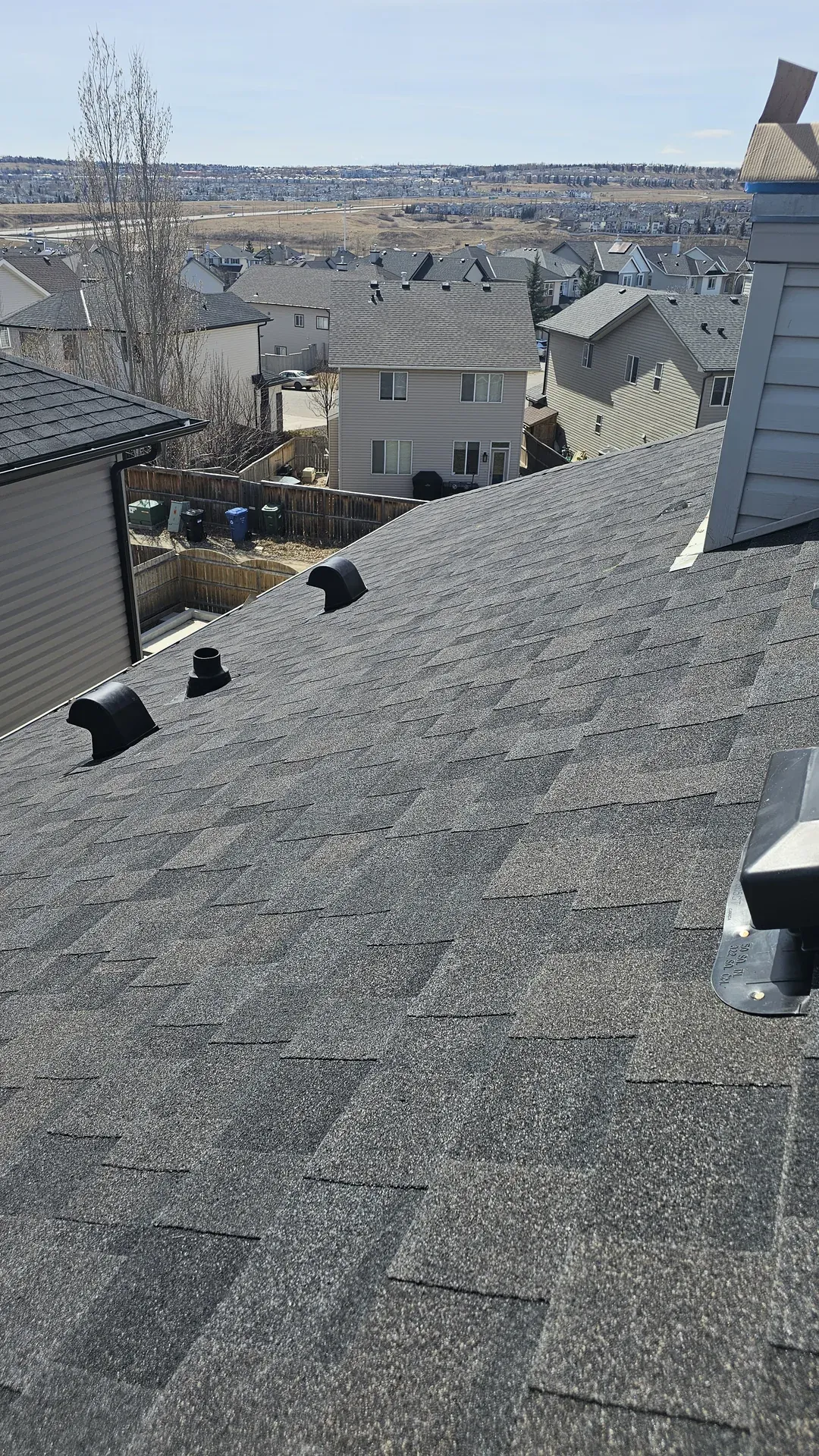
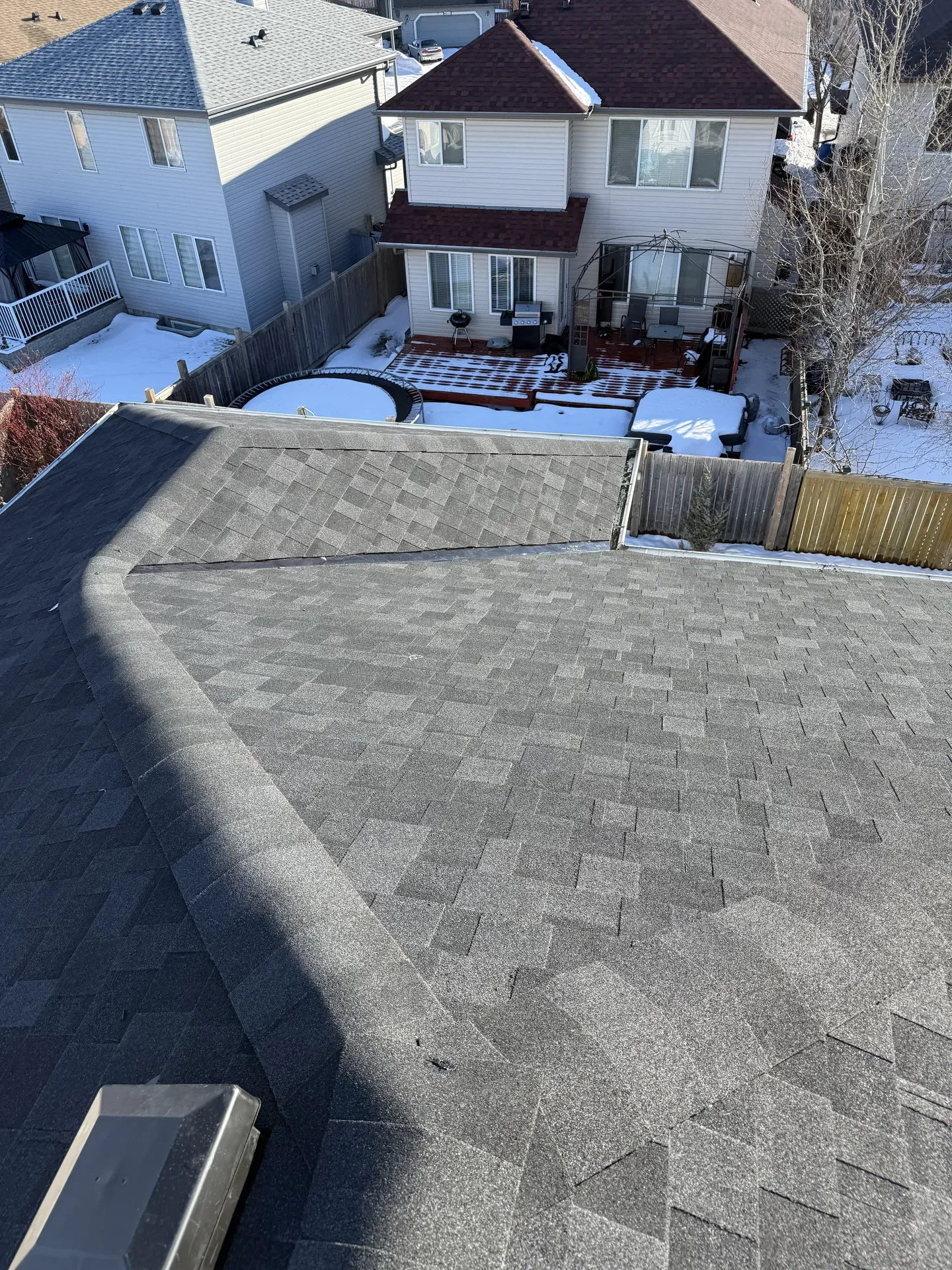
Soffit & Fascia in
St. Albert, Alberta.
Aluminum soffit and fascia with the attic intake genuinely calculated, and the eave opened up so the ventilation works. On St. Albert's older homes this is usually the answer to a February ceiling stain.
Free Soffit & Fascia Estimate
Get your St. Albert quote.
Free, no obligation, and priced on your actual St. Albert home. We reply the same day.
Tell us about your St. Albert home and we put a real number in writing. No obligation, no sales pitch, and we get back to you the same day.
Or call (780) 937-1184Soffit & Fascia in St. Albert
What St. Albert actually needs from a soffit & fascia job.
The 1960s and 1970s homes that make up so much of St. Albert were built with modest attic ventilation by today's standards, and then had insulation topped up repeatedly over fifty years. Each top-up pushed more blow-in toward the eave. We now regularly open an attic in Grandin, Braeside or Forest Lawn and find the soffit intake vents packed completely shut from the inside, while the soffit itself looks perfect from the driveway.
The consequences are seasonal and predictable. In winter the attic cannot flush the moisture the household produces, so it condenses as frost on the cold roof deck and melts through the ceiling during a thaw. In summer the same lack of airflow bakes the shingles from underneath, which is a large part of why a thirty-year shingle gives twenty in this climate. Alberta code asks for at least 1/300 of the insulated ceiling area in net free vent area, split roughly evenly between intake at the soffit and exhaust near the ridge, and we calculate that rather than guessing at panel count.
Fascia in the older neighbourhoods brings its own problem. Original wood fascia under a heavy tree canopy, behind an eavestrough that has been blocking twice a year for decades, is frequently soft at the back where nobody has ever seen it. Capping over soft fascia with aluminum hides it and gives the hangers nothing to hold. We take the old board off, look, and replace what needs replacing.
About St. Albert
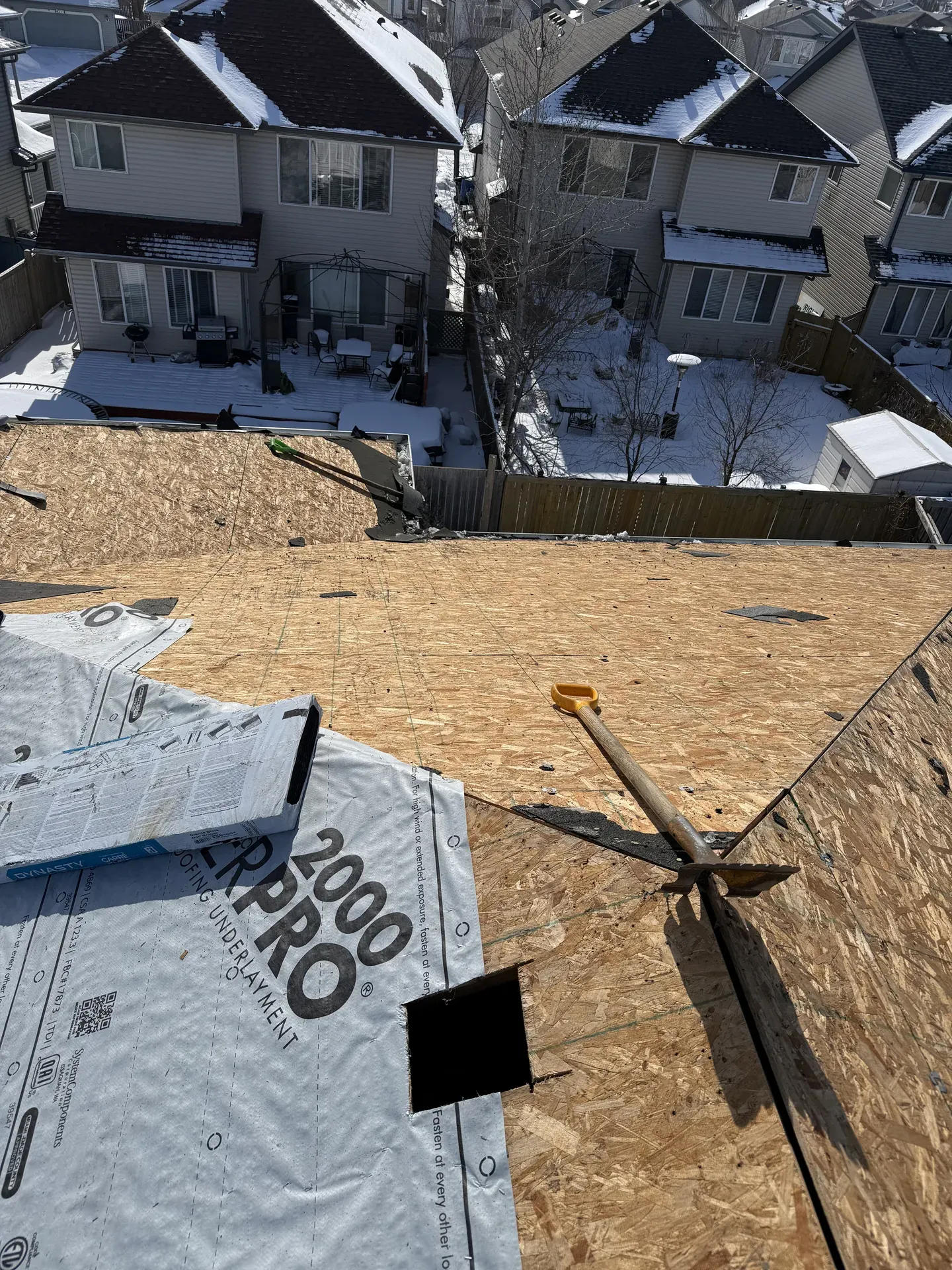
St. Albert was founded in 1861 as a Métis settlement on the Sturgeon River, making it the oldest continuously inhabited non-fortified community in Alberta. That long history shows up on the roofline: a downtown and river-valley core of 1960s and 1970s housing under a genuinely mature tree canopy, an eighties and nineties ring around it, and new construction pushing north into Jensen Lakes and Cherot. Royal Roofing's own shop is on McKenney Avenue, so this is the city we work in most.
Where We Work
St. Albert neighbourhoods we work in.
We have done soffit & fascia work across St. Albert, from the established streets in Grandin, Braeside, Akinsdale to the newer builds in Jensen Lakes, Cherot, Riverside.
Our Standard
What every St. Albert soffit & fascia job includes.
Soffit and fascia get treated as trim, and they are actually the intake half of your attic ventilation system. Every cubic foot of air that leaves at the ridge has to enter somewhere, and it enters through the soffit. Get that wrong and the attic stops breathing, which is how you end up with attic rain in February and shingles that age from underneath. We install pre-finished aluminum with the vented area properly proportioned, and we open the blocking behind it so the airflow is real rather than decorative.
Vented soffit sized to the code
Alberta requires at least 1/300 of insulated ceiling area in net free vent area, split roughly half intake and half exhaust. We calculate the intake rather than guessing at panel count.
Blocking opened behind the panels
Perforated soffit installed over solid sheathing that was never cut open ventilates nothing. We check, and we open it.
Pre-finished aluminum
Baked enamel finish that holds colour, will not rot, and does not need painting. Colour matched to your fascia, eavestrough and trim.
Fascia over sound wood
Aluminum fascia capping is only as good as the board behind it. Rotten fascia gets replaced, not wrapped over, because wrapping rot just hides it.
Tight mitred corners
Corners cut and folded properly rather than butted and caulked. It is the detail that separates a finished eave from a patched one.
Baffles at the eave
Rafter baffles so blow-in insulation cannot drift into the eave and seal the intake shut, which is the single most common ventilation failure we find.
Bird and pest exclusion
Gaps at the eave closed properly so squirrels, birds and wasps are not using your soffit as a front door.
Done with the eavestrough
Fascia, soffit and eavestrough share the same access. Doing them together typically costs 10 to 15 percent less than separate visits.
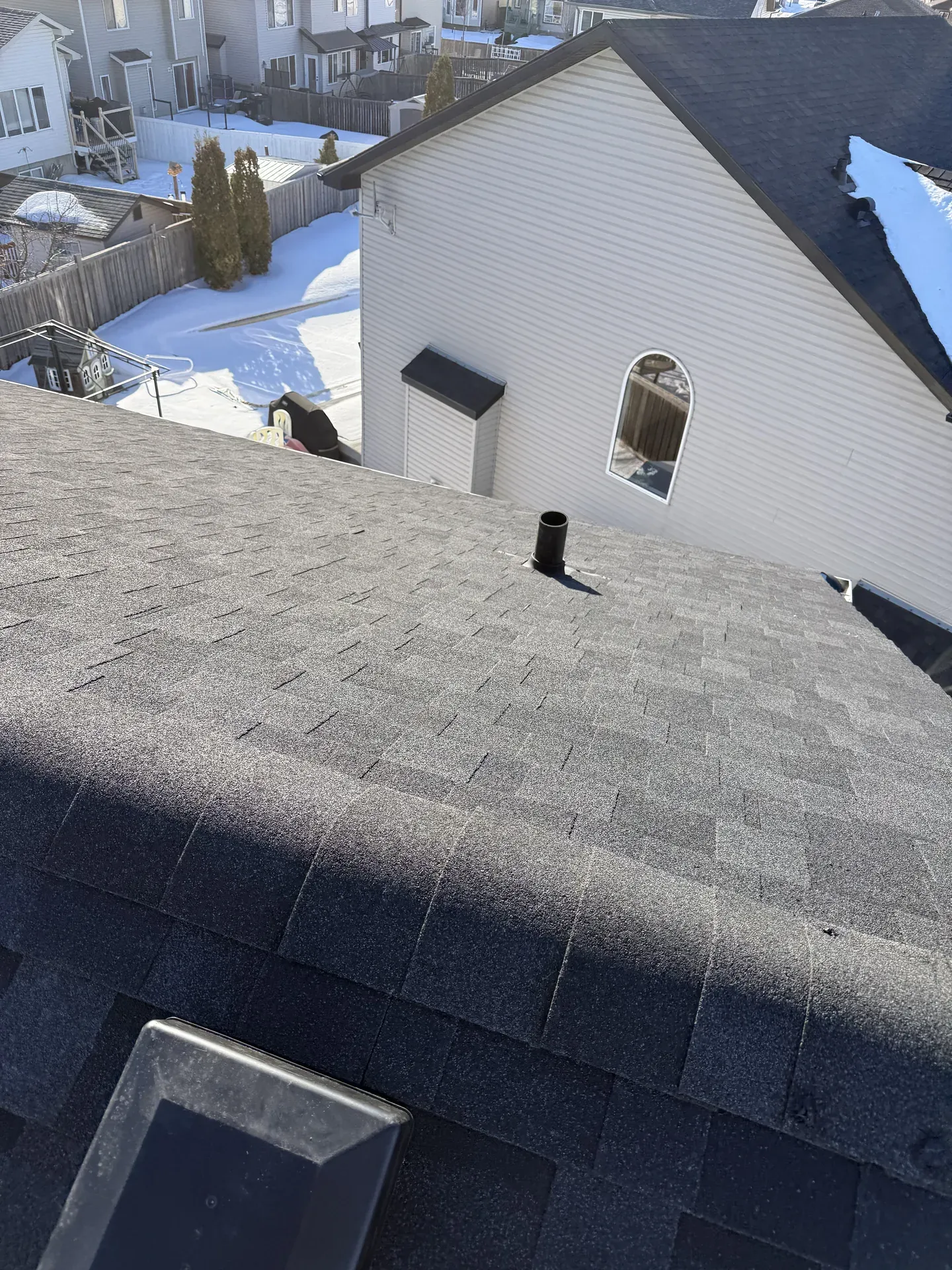
St. Albert Pricing
What this costs in St. Albert.
Real 2026 ranges for the Edmonton region. Your written quote gives you a firm number for your specific home.
Aluminum soffit and fascia
$12 – $25 / linear ft
Installed, both items, pre-finished aluminum
Single-storey home
$2,200 – $5,500
Roughly 120 linear feet of each
Rafter baffles / intake correction
$400 – $1,200
Clearing blocked soffit intake, per attic
Attic ventilation upgrade
$300 – $800
Added or corrected exhaust venting
Doing soffit and fascia together costs meaningfully less than doing them separately, because the access equipment and setup are shared. Rotten fascia board discovered during removal is replaced at cost and shown to you first. For the complete regional breakdown, see our Edmonton roof replacement cost guide.
Permits · City of St. Albert
Do you need a permit in St. Albert?
St. Albert, like the rest of the region, treats a like-for-like re-shingle or re-clad as maintenance rather than construction, so no building permit is required. A permit is needed where the work changes the roof structure, shape or height, adds floor area, or follows fire or flood damage. Our shop is in St. Albert, so we deal with the City regularly and confirm the position before every job.
FAQ
St. Albert soffit & fascia questions.
Almost certainly not. A stain that appears during a thaw, in more than one unrelated spot, on a roof that is dry all summer, is attic rain: indoor moisture condensing as frost on the cold deck and melting all at once. On the older St. Albert housing stock the cause is nearly always blocked soffit intake from decades of insulation top-ups. Clearing it runs $400 to $1,200, against $9,000 or more for a roof that would not have fixed it.
Only if the board behind it is sound, and under a St. Albert tree canopy with an eavestrough that blocks twice a year it often is not. Capping soft wood hides the rot and gives your eavestrough hangers nothing to bite into, which is how a run ends up on the lawn after an ice load. We take a look first and tell you honestly which board needs replacing and which does not.
Installed pre-finished aluminum soffit and fascia together runs roughly $12 to $25 per linear foot, so a typical single-storey home with about 120 linear feet of each lands around $2,200 to $5,500. Doing both together with the eavestrough saves 10 to 15 percent over separate visits, because the access equipment and setup are shared.
Sometimes, if the soffit is sound aluminum with adequate vented area. But fascia usually rots because water has been getting behind it for years, and that same water has often been in the soffit cavity. We would rather open it, look, and tell you honestly than cap over a problem.
From the ground you cannot, which is the problem. The panels look perfect while blow-in insulation has drifted into the eave and sealed the intake from inside. It takes someone in the attic with a light checking whether daylight and airflow reach the eave. That is the first thing we look at, and it is free.
It is the most common cause we find. Blocked intake stops the attic flushing moist air, so the moisture your household produces condenses as frost on the cold roof deck through a cold snap and melts through your ceiling when it warms up. Clearing the intake and adding baffles fixes more attic moisture problems than anything else we do.
More in St. Albert
Everything under one roof.
Roofing in St. Albert
This is our home city.
Roof Repair in St. Albert
Leaks, storm damage, ice at the eaves and the winter ceiling stains that are not leaks at all.
Siding in St. Albert
Fifty-year-old cladding in the river valley neighbourhoods, tired nineties vinyl, and new builds where what goes behind the panel matters more than the panel.
Eavestrough in St. Albert
Seamless aluminum formed at your St.
Worth Reading