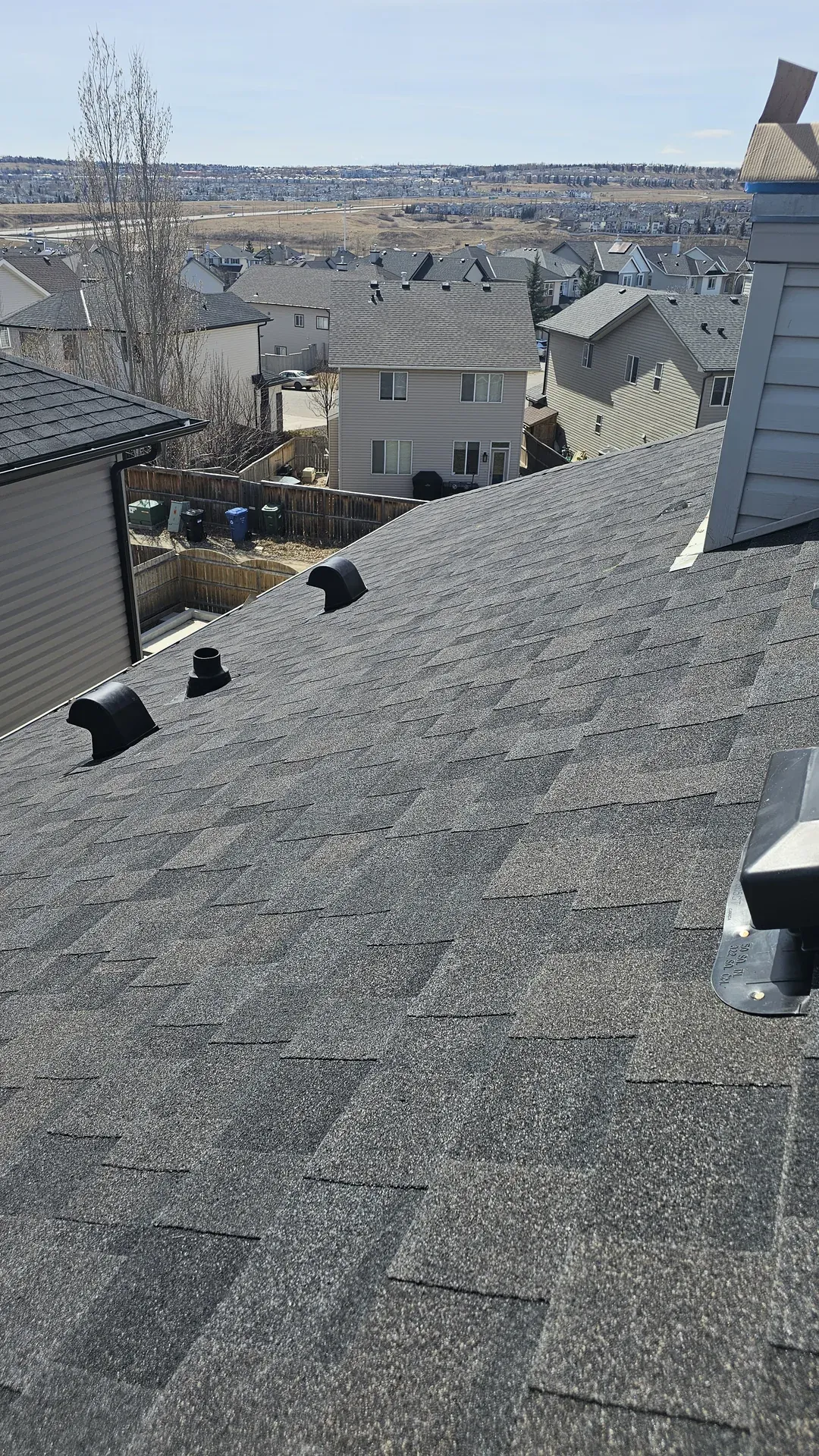
How Long Does a Roof Last in Edmonton? (And How to Tell Yours Is Done)
Real service life for asphalt, metal and cedar on Edmonton homes, why the number on the wrapper is not the number you get, and the signs it is time to replace.
Royal Roofing Edmonton
Edmonton roofing & exteriors since 2011
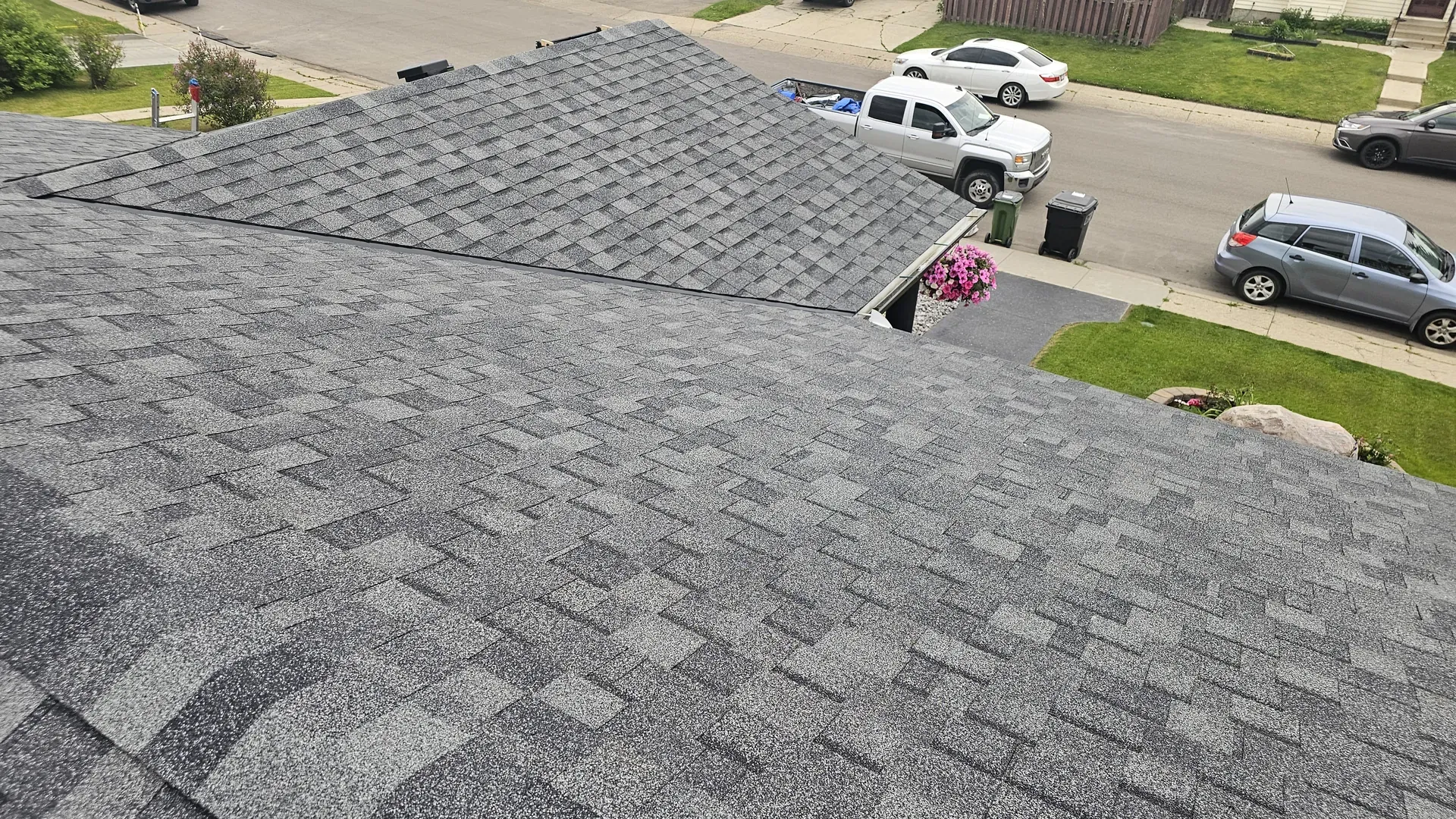
Two houses go up on the same street in Terwillegar in 2003 with identical shingles from the same pallet. Twenty two years later, one of them still has a roof with life left in it and the other was replaced six years ago. Same product, same weather, same builder.
The difference was never the shingle. It was what was underneath it and what happened to it along the way. Here is what actually determines how long a roof lasts in Edmonton, and how to work out where yours sits.
Real service life, by material
Manufacturer warranties are not lifespan estimates. A “lifetime” shingle is a warranty term with a prorated schedule attached to it, not a promise about year forty. These are the numbers we see on Edmonton roofs.
| Material | Rated / marketed | Realistic in Edmonton |
|---|---|---|
| 3-tab asphalt | 20 – 25 years | 15 – 20 years |
| Architectural asphalt | 30 – 50 years | 20 – 25 years |
| Class 4 impact-rated asphalt | Lifetime limited | 25 – 30 years |
| Cedar shakes | 30 – 40 years | 20 – 30 years, with maintenance |
| Standing seam metal | 50+ years | 40 – 50 years |
| Torch-on / modified bitumen (flat) | 20 – 25 years | 15 – 20 years |
Two patterns are worth noticing. The gap between rated and realistic is widest on asphalt, and it is widest of all on the cheapest asphalt. And the premium products are the ones that come closest to their rated life, because the same qualities that make them expensive are the ones the prairie tests.
Why the number on the wrapper is not the number you get
A shingle warranty is written against manufacturing defects under normal conditions. Edmonton supplies abnormal conditions in four flavours.
UV and thermal cycling. Prairie sun drives the volatile oils out of the asphalt over time. As the shingle dries it gets brittle, and brittle shingles crack when the roof expands and contracts. Ours expands and contracts a lot: from a July deck temperature well above 50 degrees to a January deck below minus 25 is an enormous annual swing, repeated for two decades.
Freeze-thaw. Not the seasonal change, the weekly one. A February that swings from minus 28 to plus 4 and back inside a week works at every seal strip and every nail. This is the mechanism most people underestimate.
Hail. One significant event can cut five to ten years off service life by stripping the granule layer that shields the mat from UV. The roof does not leak that day. It simply starts ageing faster, permanently. Our guide to hail damage and insurance claims covers what that looks like.
Snow load and ice. Roughly 127 centimetres of snow a year, sitting on the roof rather than melting off, with meltwater refreezing at the eaves as ice dams. The lower three feet of an Edmonton roof takes a beating the rest of it never sees.
The five things that actually decide it
1. Attic ventilation (the big one)
An under-ventilated attic bakes the shingles from underneath. Deck temperatures climb, the asphalt loses its oils faster, and the shingle ages from the back side where nobody is looking. In winter the same poor airflow produces condensation, attic rain, and damp sheathing.
Alberta code asks for at least 1/300 of the insulated ceiling area in net free vent area, split roughly half intake at the soffits and half exhaust near the ridge. The failure we find most often is not missing vents, it is blow-in insulation that has drifted into the eave and sealed the soffit intake shut. The vents are there. Nothing is moving through them.
Ventilation is the single largest controllable factor in roof lifespan, and it is also the cheapest thing on this list to fix.
2. Installation quality
Nails driven too high miss the lamination and the course above never locks down. Nails driven too hard cut the mat. Reused flashings leak at the joint. Ice and water shield stopped short of the interior wall line. Starter strip run backwards. None of this is visible from the driveway on the day the job finishes; all of it shows up in year eight.
3. Whether it took hail
Cumulative, permanent, and invisible until it isn’t.
4. Pitch and orientation
Steep roofs shed water and snow fast and last longer. Low-slope sections hold both and fail first. South-facing slopes take the UV; north-facing slopes hold snow and ice longer and see more freeze-thaw. On most Edmonton homes the north slope and the low-slope section over an addition are the first parts to go.
5. Whether anyone looked at it
A cracked vent boot costs $300 to $500 to replace. Left alone for three winters it soaks the sheathing, and now it is a deck repair and a section of shingles. The roofs that reach their full life are the ones somebody checked every few years.
The signs your roof is done
Any one of these on its own might mean a repair. Three or more together, on a roof past fifteen, generally means replacement.
From the ground:
- Curling, cupping, or clawing shingles. Edges lifting or the middle bowing. This is asphalt that has dried out and shrunk. It does not reverse.
- Bald patches where the granule layer is gone and you can see dark asphalt across an area rather than in scattered spots.
- Cracks running across multiple shingles, especially on more than one slope. Isolated cracking is a repair; widespread cracking is a dead roof.
- A roofline that dips or waves. Sheathing that is soft or rotted. This one is urgent.
- Missing shingles after ordinary wind. A healthy roof does not lose tabs in a 60 km/h gust.
- Moss or dark streaking, less common here than on the coast but a sign of retained moisture and poor drying.
In the eavestrough:
- Granules accumulating well beyond the first year after installation. A cup of granules out of a downspout after a rain means the roof is shedding its sunscreen.
In the attic:
- Daylight visible through the deck
- Damp or compressed insulation
- Dark staining or mould on the underside of the sheathing
- Rusted nail tips, which means recurring condensation
Inside the house:
- Ceiling or wall stains, particularly if they recur in the same spot
- Rising heating bills with no other explanation
On paper:
- You know the roof was installed more than twenty years ago
- You have paid for repairs in more than two consecutive years
- Your insurer has started asking about the roof’s age at renewal, which increasingly happens around the fifteen-year mark in Alberta
Repair or replace?
A rough decision rule that has served our customers well.
Repair when the damage is localised, the roof is under about fifteen years old, the rest of the surface is in good shape, and the cause is identifiable and fixable. Most Edmonton roof repairs run $450 to $1,500, and a repair on a roof with years left is money well spent.
Replace when the damage is spread across multiple slopes, the roof is past its rated life, you have had leaks in more than one location, or the repair estimate is climbing past roughly 30 percent of a replacement. At that point you are investing in something that is going to fail anyway.
And the honest middle ground: if the roof is at eighteen years, not leaking, but visibly tired, you are not in an emergency. You are in a planning window. That is the best possible position, because it means you can book outside the summer rush, choose your materials properly rather than under pressure, and not be negotiating with a tarp on your roof. Our guide to the best time of year to replace a roof in Edmonton covers how to use that window.
Getting more years out of the roof you have
- Fix the ventilation. Clear blocked soffit intake, add baffles, balance intake and exhaust. Cheapest years you will ever buy.
- Keep the eavestrough clear. Water backing up at the eave saturates the lower courses and the fascia. Twice a year, spring and fall.
- Rake snow off the lower roof after heavy snowfall to prevent ice dams from forming at the eaves.
- Trim branches back. Abrasion and retained moisture, plus a delivery route for squirrels.
- Replace vent boots on schedule. The rubber collar around a plumbing stack usually cracks somewhere between year twelve and eighteen, well before the shingles are finished. It is a cheap part and a common leak.
- Get a proper look every three to five years, and after any significant hail. A roof inspection with photos tells you where you stand.
Where does your roof actually sit?
If you know roughly when it was installed, you can place yourself on this scale reasonably well:
- Under 10 years: should be trouble-free. Any problem is an installation defect or storm damage, and one of those is under warranty.
- 10 to 15 years: mid-life. Worth an inspection, worth confirming the ventilation is working, worth asking your insurer how they treat roof age.
- 15 to 20 years: watch it. Get eyes on it annually. Start budgeting.
- 20 to 25 years: at or past the end for standard asphalt in this climate. Plan the replacement on your terms rather than after a leak picks the date for you.
- Over 25 years: unless it is metal or premium impact-rated, it is living on borrowed time.
We will tell you honestly which bracket you are in, with photos, for free, anywhere in the Edmonton region. Sometimes that answer is “you have five good years left, call us in 2030.” We would rather give you that than sell you a roof you did not need yet. Get in touch and find out where you stand.
Free Estimate
Want a straight answer on your own roof?
Tell us about your roof and we send you a written quote. No pressure, no scare tactics, and we will tell you when a repair is all you need.
Keep reading
All articles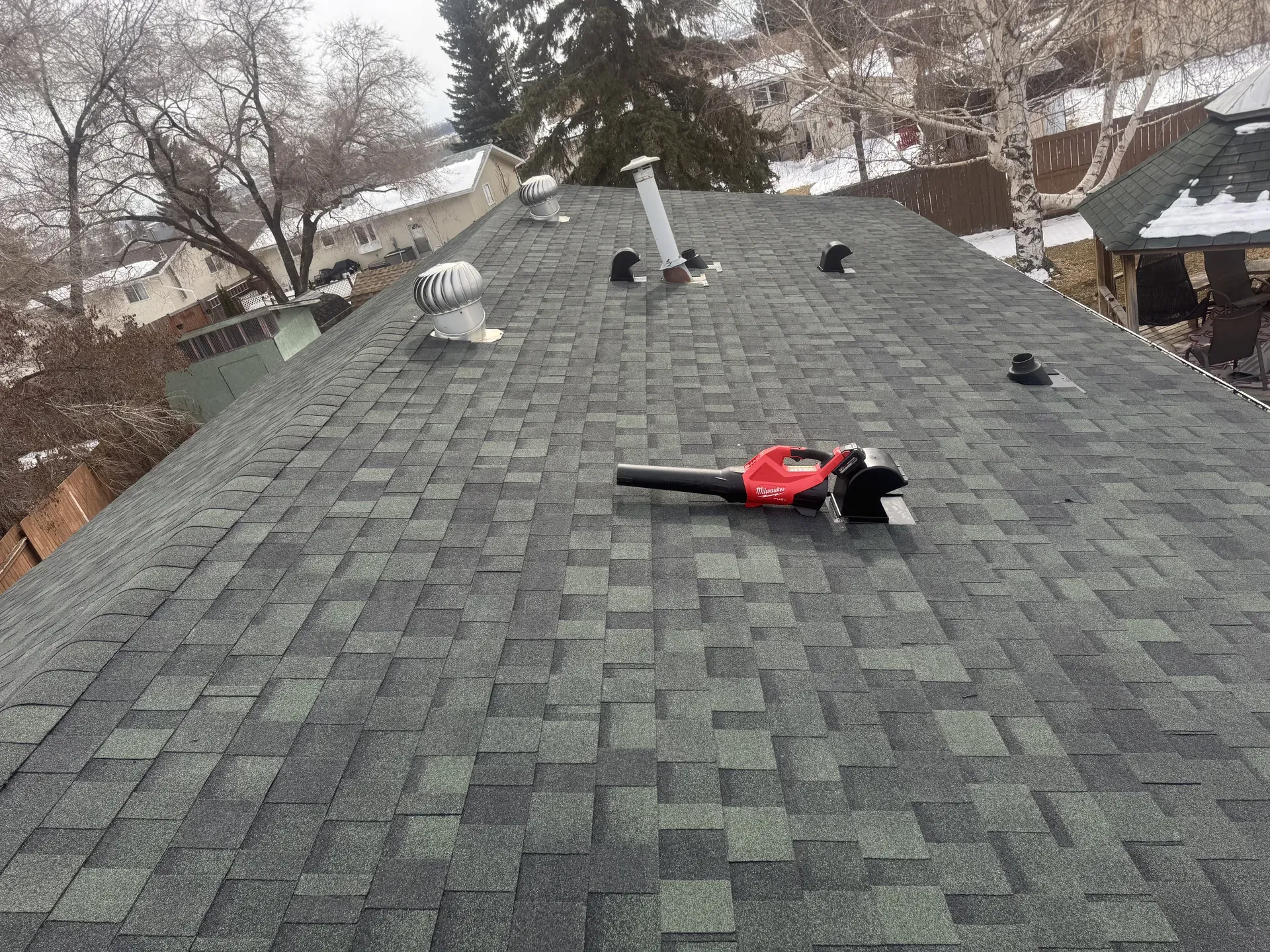
Attic Rain in Edmonton: Why Your Ceiling Drips in February
Water staining your ceiling after a cold snap breaks is almost never a roof leak. Here is what attic rain is, why Edmonton homes get it, and how to actually fix it.
Read the guide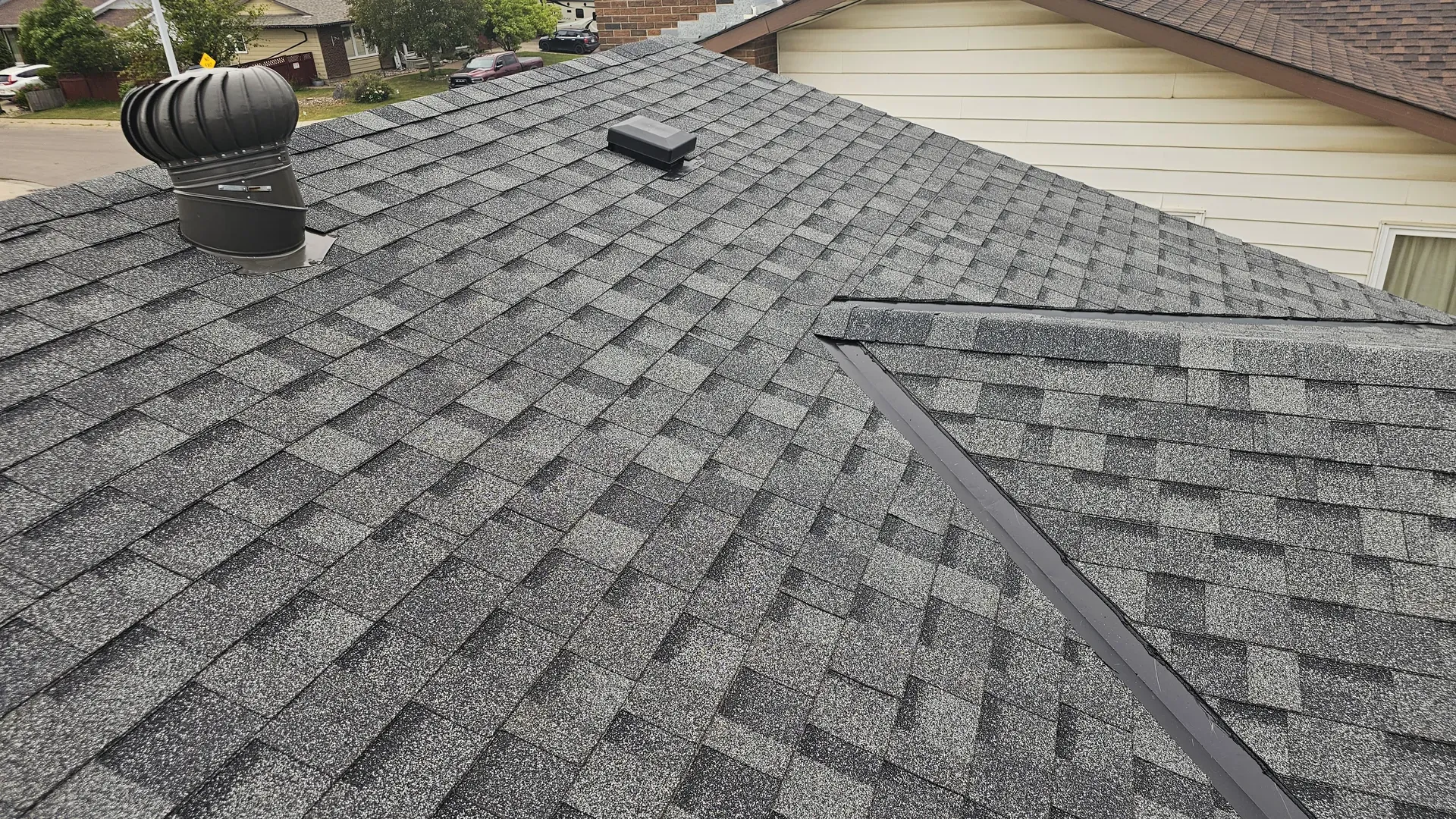
The Best Shingles for Edmonton Weather: IKO, BP, Malarkey and GAF Compared
Wind ratings, impact class and real Edmonton performance for the four shingle brands we install most, plus the parts of the system that matter more than the brand.
Read the guide
The Best Time of Year to Replace a Roof in Edmonton
Season by season, what actually changes for an Edmonton re-roof: pricing, scheduling, shingle sealing temperatures, and whether winter roofing is a real option.
Read the guide