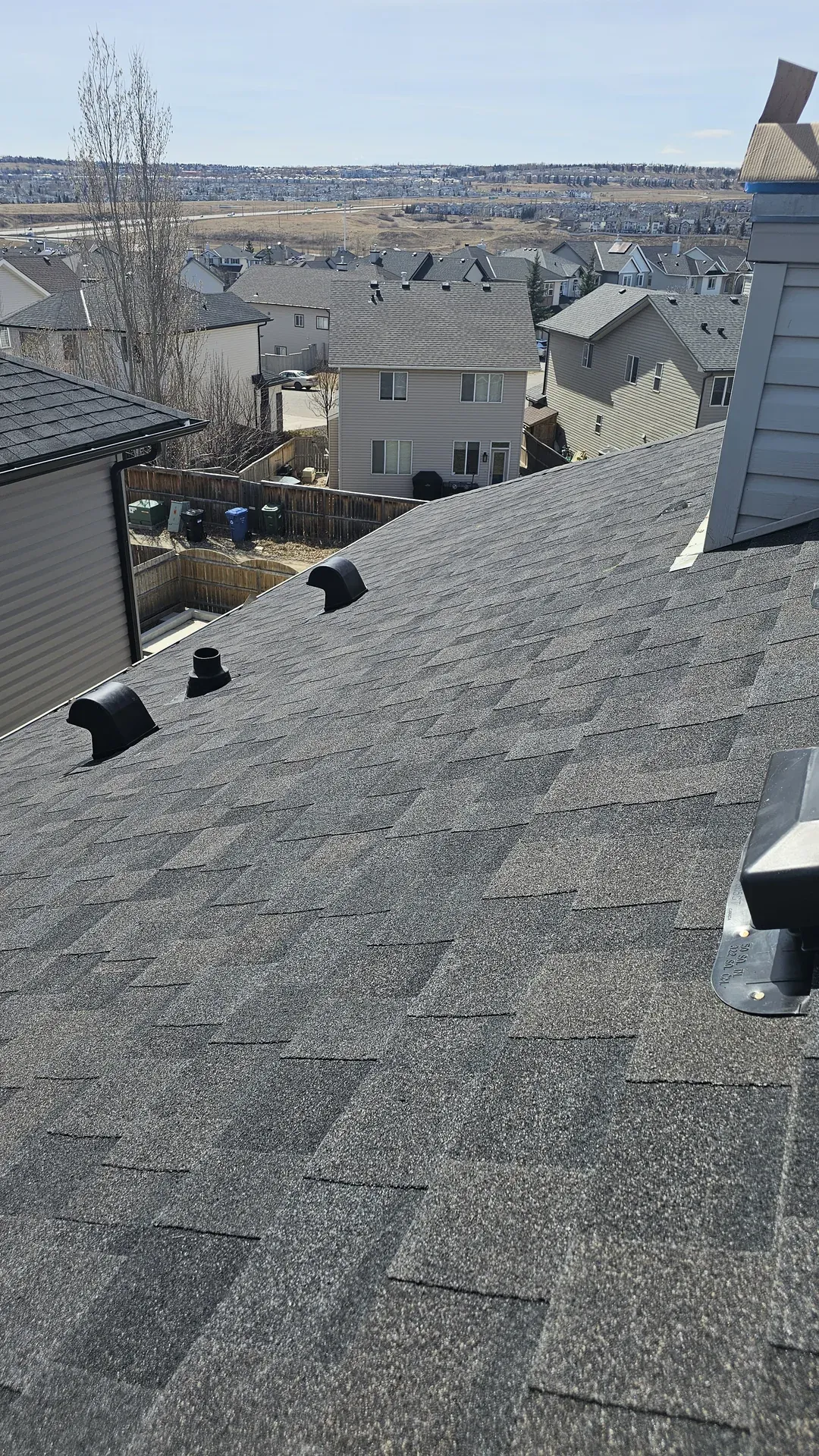
The Best Time of Year to Replace a Roof in Edmonton
Season by season, what actually changes for an Edmonton re-roof: pricing, scheduling, shingle sealing temperatures, and whether winter roofing is a real option.
Royal Roofing Edmonton
Edmonton roofing & exteriors since 2011
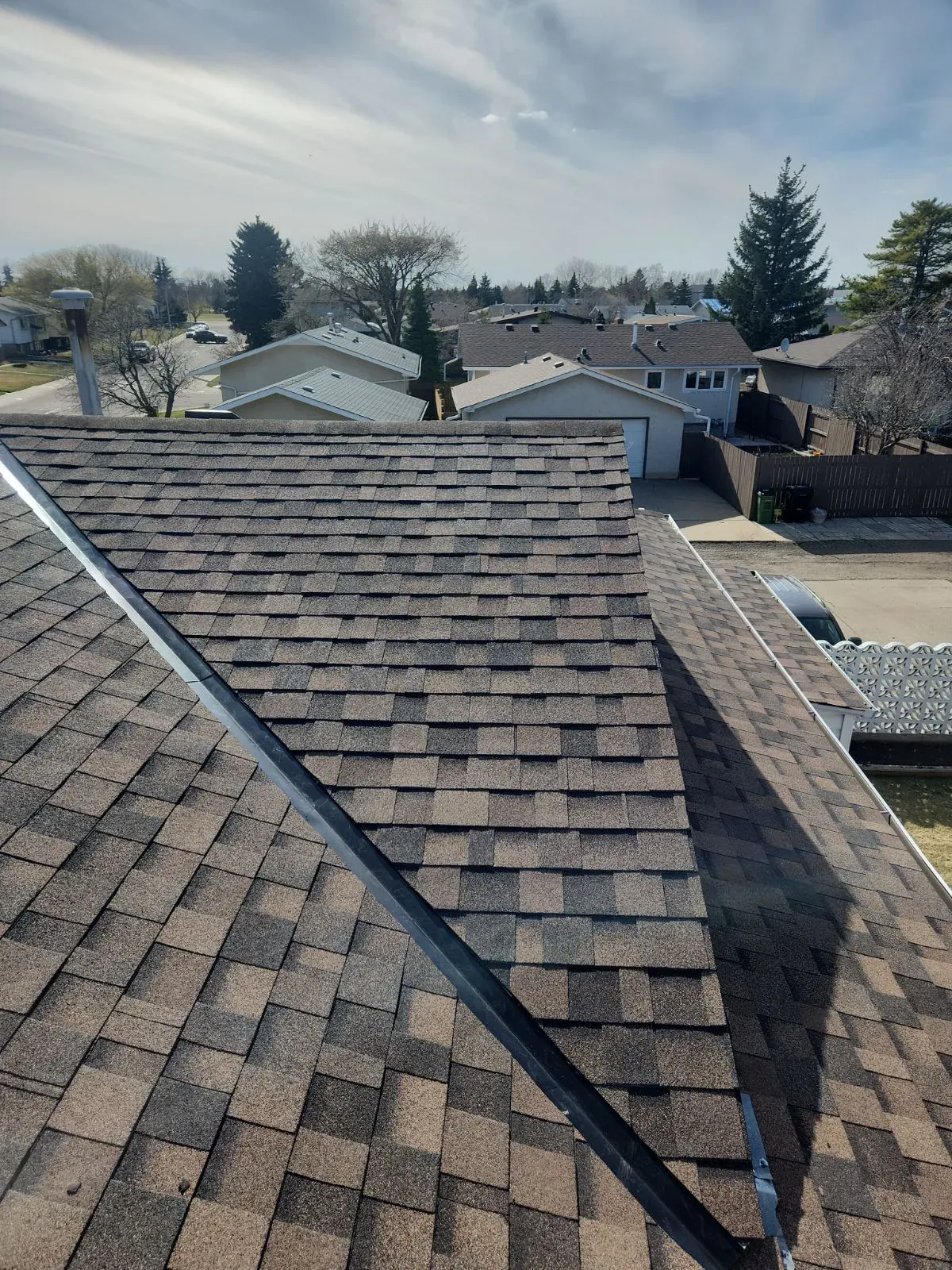
Edmonton gives roofers a genuinely short window compared with most of Canada, and homeowners feel it as a scheduling problem: everyone wants their roof done in July, and July is when nobody has an opening.
The good news is that the best window is not the one everybody is fighting over. Here is what actually changes season to season, including the honest version of what happens when you shingle in the cold.
The short answer
Late August through mid-October is the best time to replace a roof in Edmonton. Stable temperatures, warm decks, low precipitation, less competition than midsummer, and the shingles have weeks of decent weather to seal properly before winter.
Late winter into early spring is the value window. Crews are hungrier, scheduling is flexible, and you can often book a fall install at a better rate by committing early.
Midsummer is the worst time to be starting from scratch, not because the weather is bad but because you are in a queue behind everyone whose roof just took hail.
Spring: March to May
Everyone’s instinct, and it is a mixed bag.
In its favour: you have just come through winter, so if something failed you know about it. Contractors are coming off the slow season and are usually available in March and early April. Getting it done before storm season means you go into summer with a roof that can take a hit.
Against it: Edmonton spring is unreliable. We get snow in April more often than anyone likes to admit, and a roof cannot be shingled onto a wet or frozen deck. Melt runoff and mud make sites messy. And by mid-May the phone is already busy.
Best used for: booking, not necessarily installing. A spring quote and a September install date is a very good combination.
Summer: June to August
Peak season, for good and bad reasons.
In its favour: long days, warm decks, and shingles that seal quickly and completely. Self-sealing strips activate readily and the roof is fully bonded within days.
Against it: this is also Alberta’s storm season, and it is the reason summer scheduling collapses. Edmonton-area storms produced roughly $230 million in insured damage between May and July of 2026, and every one of those claims went into the same contractor queue you are in. Lead times stretch. Prices sit at their firmest. Crews are stretched thin, which is exactly when quality control slips at the companies that subcontract.
Very hot days have a technical downside too: shingles get soft in direct sun above about 30 degrees, which means more scuffing under foot traffic and more care needed on steep pitches.
Best used for: genuine storm damage and emergencies, which is what most summer work actually is.
Fall: September to October
Our pick, and it is not close.
Deck temperatures are still warm enough for reliable sealing, daylight is adequate, precipitation drops off, and the summer claim rush has cleared out. Crews are back to normal capacity and can give a job the time it deserves. Best of all, the roof gets several weeks of moderate temperatures to seal completely before the first hard freeze, which is exactly what an asphalt shingle wants.
There is a practical benefit too: a roof finished in early October goes into its first winter fully bonded, with new ice and water shield at the eaves and corrected ventilation, which is the combination that prevents ice dams from doing damage.
The only caution is the back end. By late October we are watching the forecast closely, and a job booked for November 5 can get pushed. Book fall work early rather than late.
Winter: November to February
This is where the myths live, so let us be precise.
Roofing in an Edmonton winter is possible. It is not ideal, and it is not free of consequences.
The technical issue is the self-sealing strip. Asphalt shingles ship with a thermally activated adhesive band that softens in warmth and sunlight and bonds each course to the one below it. That bond is what gives the roof its wind resistance. The strips need roughly 4 degrees Celsius and some sun to activate, and manufacturers specify an ideal installation range of about 4 to 26 degrees.
At minus 15, nothing seals. The roof is watertight, because the shingles are nailed and lapped, but it is not bonded, and it will not be until spring.
What a competent crew does about it:
- Store the shingles warm. Industry guidance from ARMA and the manufacturers is to keep bundles at around 21 degrees for at least 24 hours before they go on the roof. Shingles installed straight off a frozen pallet crack when they are bent over a hip or a ridge.
- Hand-seal every tab with an approved asphalt roofing cement, applied in the correct quantity and position, so the roof has wind resistance before spring arrives to do the job properly.
- Clear the deck completely. No snow, no frost, no ice under the underlayment. Ever. This is the one that gets skipped by crews trying to save an afternoon, and it traps moisture against the sheathing for the rest of the roof’s life.
- Adjust nailing. Cold shingles are less forgiving, and nail guns need pressure adjustment in the cold to avoid overdriving.
Where winter genuinely makes sense: an active leak that cannot wait, storm damage, a real estate closing that will not move, or a homeowner who values the flexible scheduling and the lower off-season pricing and understands the tradeoff.
Where it does not: a roof that is tired but functional, in December, with no leak. That roof should be booked for next September.
Our own position: we would rather schedule a full replacement between April and October. We do winter work, and we do it properly with warmed materials and hand-sealed tabs, but we will tell you plainly if waiting is the better call. Urgent roof repairs we handle year-round without hesitation.
What actually moves the price by season
Roofing is not like flights, but there is a real off-peak effect. Companies price for demand, and demand in this city is wildly seasonal.
- Late fall through early spring is the quiet stretch, and it is common to see quotes come in 10 to 15 percent under peak summer pricing, with flexible dates.
- After a major hail event, prices firm up immediately and lead times stretch to weeks.
- Booking early for a later install is the underused move. Get the inspection and quote in February, lock in a September date, and you get off-season pricing with prime-season weather.
Material cost has been drifting upward regardless of season, running roughly 5 percent above last year, so waiting a year to save on timing is usually a wash. Our Edmonton roof replacement cost guide has the current numbers.
Emergencies do not get to pick a season
None of the above applies if water is coming in. An active leak in January gets tarped, dried, and repaired now, because a week of water in the sheathing and insulation costs more than the repair does.
The distinction is between stopping the damage, which happens immediately in any weather, and replacing the roof, which should happen when the conditions let us build it properly.
A sensible plan for most Edmonton homeowners
- Get the inspection in late winter or early spring, while contractors have time to do it thoroughly.
- Get the written quote then, so you can compare properly rather than under pressure.
- Book the install for late August through early October.
- Handle any urgent repair immediately, whatever the calendar says.
- Fix the ventilation at the same time as the roof. The access is already there and it is the cheapest years of roof life you will ever buy.
If you are somewhere in that cycle now, get in touch for a free quote. We will tell you what the roof needs, when it needs it, and whether you can safely wait for the good window.
Free Estimate
Want a straight answer on your own roof?
Tell us about your roof and we send you a written quote. No pressure, no scare tactics, and we will tell you when a repair is all you need.
Keep reading
All articles
Attic Rain in Edmonton: Why Your Ceiling Drips in February
Water staining your ceiling after a cold snap breaks is almost never a roof leak. Here is what attic rain is, why Edmonton homes get it, and how to actually fix it.
Read the guide
The Best Shingles for Edmonton Weather: IKO, BP, Malarkey and GAF Compared
Wind ratings, impact class and real Edmonton performance for the four shingle brands we install most, plus the parts of the system that matter more than the brand.
Read the guide
How Long Does a Roof Last in Edmonton? (And How to Tell Yours Is Done)
Real service life for asphalt, metal and cedar on Edmonton homes, why the number on the wrapper is not the number you get, and the signs it is time to replace.
Read the guide