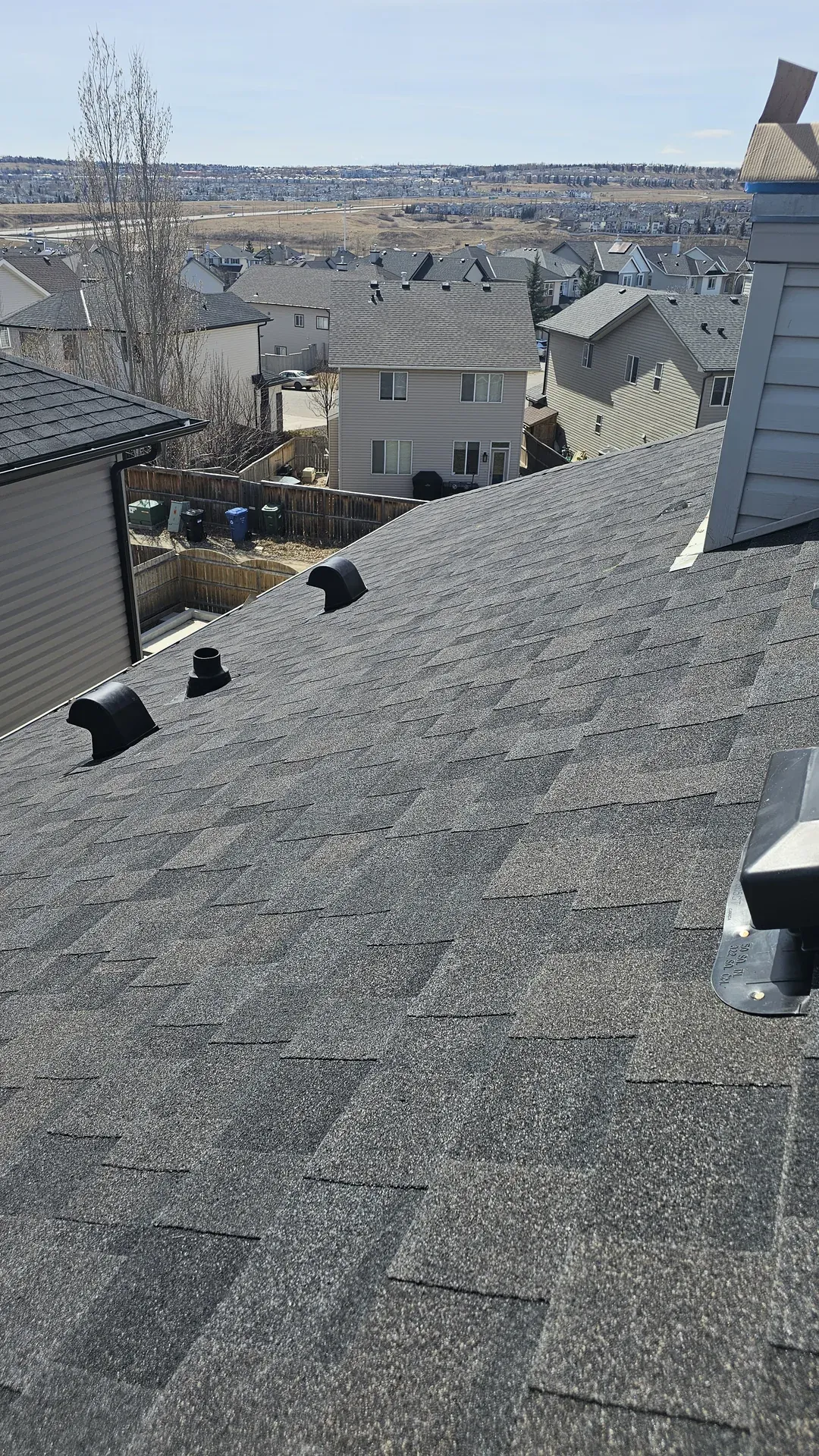
Hail Damage on an Edmonton Roof: How to Spot It and Handle the Claim
Edmonton-area storms caused $230 million in insured damage in 2026 alone. Here is how to tell real hail damage from normal wear, and how to run the claim properly.
Royal Roofing Edmonton
Edmonton roofing & exteriors since 2011
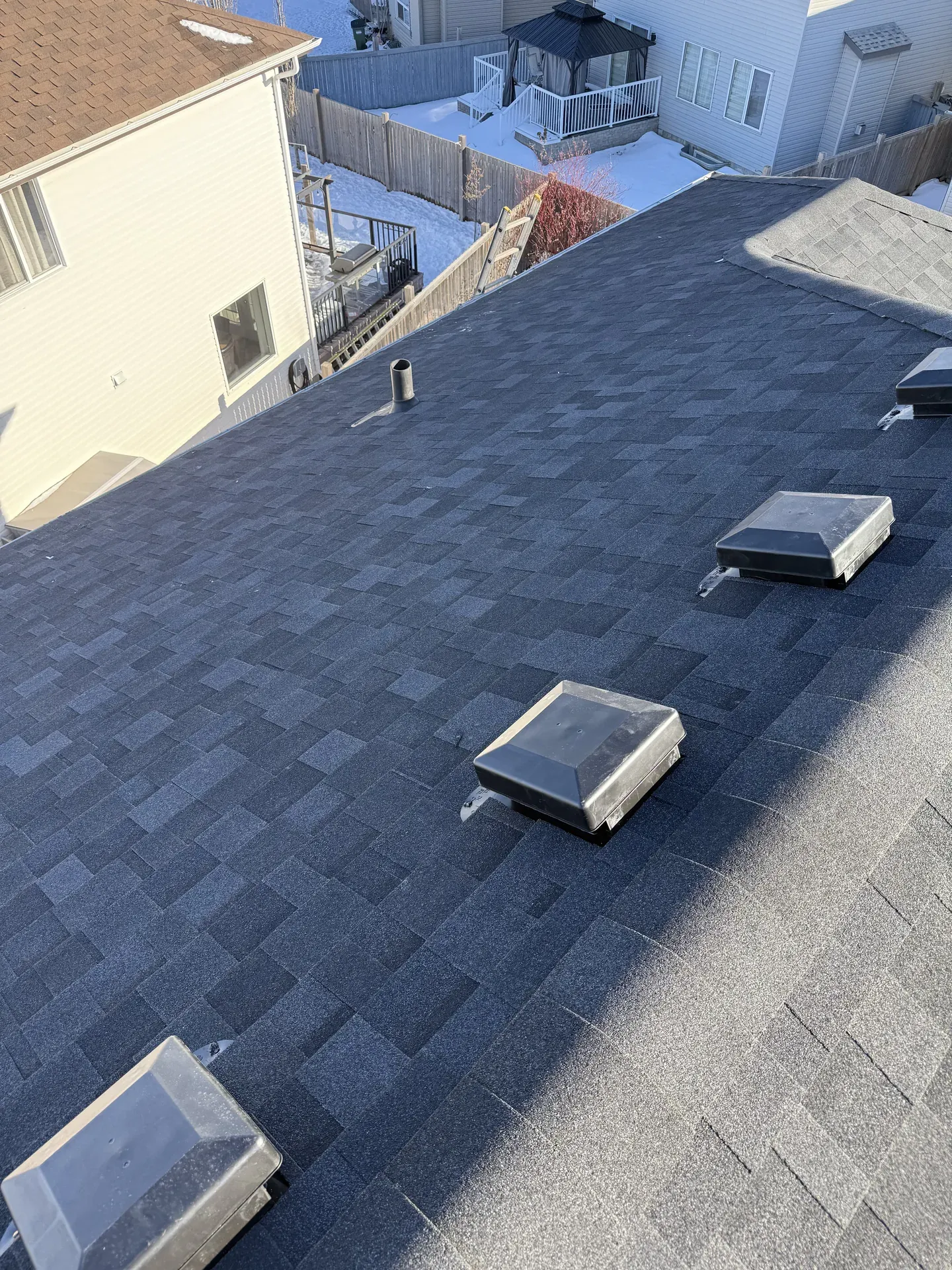
This has been an expensive summer to own a roof in the Edmonton region. The Insurance Bureau of Canada put insured damage from Edmonton-area storms at roughly $230 million since May 2026: about $80 million from the flooding in late May and early June, and about $150 million from the storm system that came through on June 20 and 21, with mid-July claims still being counted on top of that. June itself broke a record that had stood since 1914, with 244 millimetres of rain by the 27th, the wettest June in the city’s recorded history.
If your roof went through any of that, you probably have questions. This is what we tell homeowners who call us after a storm, in the order it matters.
What hail damage actually looks like on asphalt shingles
Hail damage on an asphalt roof is not usually dramatic. It rarely punches holes. What it does is bruise.
A hailstone strikes the shingle hard enough to fracture the fibreglass mat underneath and knock the protective granules loose at the point of impact. What you are left with is a dark, soft, roughly circular spot, typically somewhere between the size of a dime and a loonie, with the black asphalt showing through where the granules used to be. Press one and it gives slightly, like a bruise on an apple. That is where the term comes from.
The real damage is not the dent. It is that the granule layer is the shingle’s sunscreen. Strip it off and UV starts working directly on the asphalt beneath. The shingle dries, hardens, and cracks years before it should. A single significant hail event can take five to ten years off the service life of a standard asphalt roof without producing a single leak on the day it happens.
Alongside the bruising, look for:
- Granules piling up at the bottom of downspouts and in the eavestrough, well beyond the normal shedding of a new roof
- Dented or dimpled metal: vent caps, the drip edge, flashings, the eavestrough itself, and any aluminium soffit or fascia. Soft metals record hail beautifully and are often the clearest evidence on the property
- A random, scattered pattern. Hail does not follow lines. Impacts are distributed unevenly with no relation to the shingle layout
- Directional bias. Wind-driven hail hits one or two slopes hardest, usually the north and west faces in this part of Alberta
- Cracked or split shingles on older, more brittle roofs, and shingles knocked loose at the seal strip by the accompanying wind
What is not hail damage
Just as important, because insurers see a lot of claims for these, and a denied claim on your record helps nobody.
- Blistering. Small round pops in the shingle surface caused by trapped moisture and heat, usually from poor attic ventilation. Blisters have crisp, uniform edges and often appear across a whole slope. Hail bruises are irregular and scattered.
- Normal granule loss. Every asphalt roof sheds granules as it ages. Uniform thinning across the whole roof is age, not hail.
- Mechanical marks. Scuffs from foot traffic, satellite dish installs, or a ladder. Usually in a path or a cluster near an access point.
- Manufacturing defects. Occasionally real, and a warranty matter rather than an insurance matter.
- Wear at the eaves from ice damming. A winter problem. Our guide to ice dams covers what that looks like.
Checking your own roof, safely
Do not climb up. Genuinely, do not: a wet or hail-scattered roof is slick, and nothing on your roof is worth a fall. Almost everything you need can be established from the ground.
- Walk the perimeter and photograph the metal. Dented vent caps, downspouts, eavestrough, and the aluminium on the eaves. Take pictures of the dents in a soft, dry piece of siding or the mailbox too.
- Check the ground. Look for shingle granules washed out at the base of each downspout, and for pieces of shingle in the yard.
- Use your phone camera zoomed in on the lower courses of shingles from the ground or from an upstairs window.
- Check the deck, fence, air conditioner, and vehicles. Adjusters look at these to establish the hail size and direction, and so should you.
- Look in the attic with a flashlight on a bright day, from the hatch. Pinpoints of daylight through the deck mean penetration, which is rare but serious.
- Write down the date and time of the storm. This matters more than people expect.
Your first 72 hours
Document immediately. Photos, dated, of everything above. Photograph the storm itself if you can, and keep any Environment Canada warnings or news coverage of hail in your neighbourhood on the day.
Prevent further damage, but do not fix anything yet. Your policy requires you to take reasonable steps to stop the loss getting worse. Tarping an opening or clearing a blocked drain counts. A full repair before the adjuster has seen it does not help your claim.
Call your insurer or broker and open the claim. You do not need to know the extent of the damage to report it. Get a claim number.
Get an independent roofing inspection. Not to argue with the adjuster, but so you actually know what you have. We do these for free across the Edmonton region, we photograph and measure the impacts, and we give you a written summary you can hand to your adjuster whether or not you ever hire us. If it turns out to be wear rather than hail, we will tell you that too, and you will have saved yourself a claim.
Do not sign anything with anyone who knocked on your door. More on that below.
How the claim works in Alberta
Once your claim is open, an adjuster is assigned. They will either inspect the roof themselves or send an independent adjuster or engineer. They are looking for storm-created damage, and they are measuring its extent, usually by counting impacts within a marked test square on each slope.
A few realities of the Alberta market that are worth understanding before that visit:
Your deductible is probably higher than you remember. Hail deductibles across Alberta have climbed hard. Where $1,000 used to be standard, minimums of $2,500 and $5,000 are now common, and some policies apply a percentage of the insured value rather than a flat amount. Read your declarations page before you decide whether to proceed.
Replacement cost versus actual cash value is the number that matters. Replacement cost coverage pays what it costs to put a new roof on today. Actual cash value pays that minus depreciation for the age of the roof, which on a fifteen-year-old shingle roof can be more than half. Same damage, very different cheque.
And that line is moving. Through 2026, more Alberta insurers have been shifting older roofs onto actual cash value settlement automatically once the roof passes roughly fifteen years, and some now tie their best hail terms to impact-rated roofing. Alberta homeowners’ insurance premiums rose about 392 percent between December 2005 and December 2025, and insurers have responded to that by pushing risk back onto roofs. If your roof is around that age, it is worth calling your broker and asking specifically how your policy settles a hail loss, before a storm answers the question for you.
Partial approvals are normal. Adjusters often approve one or two slopes rather than a whole roof. Where the shingle is discontinued or a colour match is impossible, that becomes a negotiating point, and it is a reasonable one to raise.
Class 4 shingles, and why the maths has changed
An impact-rated shingle is one that passes UL 2218 Class 4: a two-inch steel ball dropped twenty feet onto the same spot twice without cracking the mat.
Real Class 4 options we install in Edmonton include IKO Nordic (Class 4, 210 km/h wind rating, ArmourZone nailing strip), BP Vangard 42 IR (UL 2218 Class 4, lifetime limited warranty, 180 km/h standard and 220 km/h high-wind application), and Malarkey Legacy (UL 2218 Class 4, built on NEX polymer-modified asphalt, lifetime limited with a 20-year non-prorated period). Note that IKO’s popular Dynasty is a Class 3 shingle, not Class 4, despite being sold as a premium product. It is worth confirming which one is actually on your quote.
The upgrade typically costs $2,000 to $4,000 more than standard architectural shingles on an average Edmonton home. Against that:
- Most Alberta insurers discount the dwelling portion of the premium by 15 to 25 percent for a Class 4 roof
- With hail deductibles at $2,500 to $5,000, avoiding a single claim covers a large share of the upgrade
- Increasingly, impact-rated roofing is what keeps you on replacement cost terms as the roof ages
Five years ago this was a nice-to-have. In the current Alberta market it is close to the default recommendation, and our roof replacement cost guide breaks down where it lands on a real quote.
Storm chasers: how to spot them
Every big hail event brings out-of-province crews to Alberta. Some are competent. Many are here for one season, and the warranty they hand you is worth exactly as long as their phone number stays connected.
Alberta gives you a useful, specific test. Under the Consumer Protection Act, a contractor who takes any payment before the work is finished must hold a prepaid contracting business licence from Service Alberta. Ask for the licence number. A legitimate local company will have it. Then check these:
- A real local address you can drive to, not a PO box and not a truck
- Proof of $2 million liability insurance and active WCB coverage, provided as certificates, not claimed verbally. If an uninsured worker is hurt on your property, that can become your problem
- No pressure to sign today, and no offer to “cover your deductible”, which is insurance fraud in Alberta and puts your claim at risk
- A written, itemized quote naming the actual shingle, where the ice and water shield goes, the per-sheet price for deck repairs, and the ventilation plan
- A workmanship warranty from a company that will still exist to honour it. Ours is ten years, in writing, and we have been on Edmonton roofs since 2011
Also worth knowing: door-to-door rules in Alberta require that the invitation to attend your home be expressly made by you in advance. A crew that shows up uninvited after a storm is already outside the lines.
When a claim is not worth filing
Sometimes the honest advice is to leave it.
If the damage is genuinely light, the repair sits below or near your deductible, and your roof still has years left, filing produces no cheque and a claim on your history. If your roof is twenty two years old, cosmetically hailed, and settling on actual cash value, the payout may be small enough that you are better off planning a replacement on your own schedule and choosing your own materials.
We will give you that read for free, in writing. Whether it turns into a job for us or not.
The short version
Look for scattered bruising and lost granules, not holes. Photograph the soft metal. Report the storm date promptly. Get an independent inspection before the adjuster arrives so you know what you are looking at. Check whether your policy still pays replacement cost. And do not sign anything with anyone who knocked on your door.
If you took hail this summer anywhere from Edmonton to Sherwood Park, Beaumont or Spruce Grove, get in touch for a free quote and we will tell you the truth about what you are dealing with.
Free Estimate
Want a straight answer on your own roof?
Tell us about your roof and we send you a written quote. No pressure, no scare tactics, and we will tell you when a repair is all you need.
Keep reading
All articles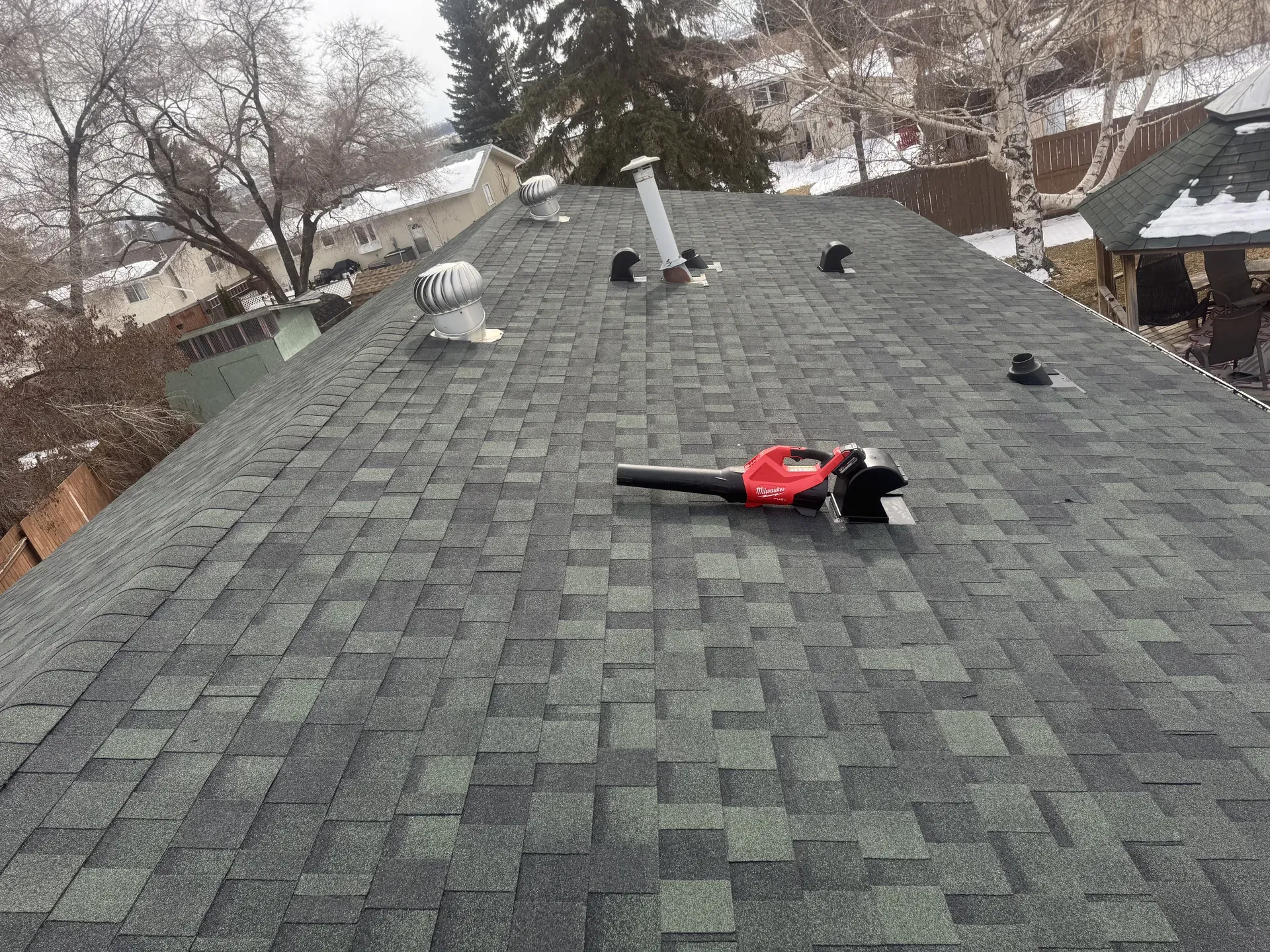
Attic Rain in Edmonton: Why Your Ceiling Drips in February
Water staining your ceiling after a cold snap breaks is almost never a roof leak. Here is what attic rain is, why Edmonton homes get it, and how to actually fix it.
Read the guide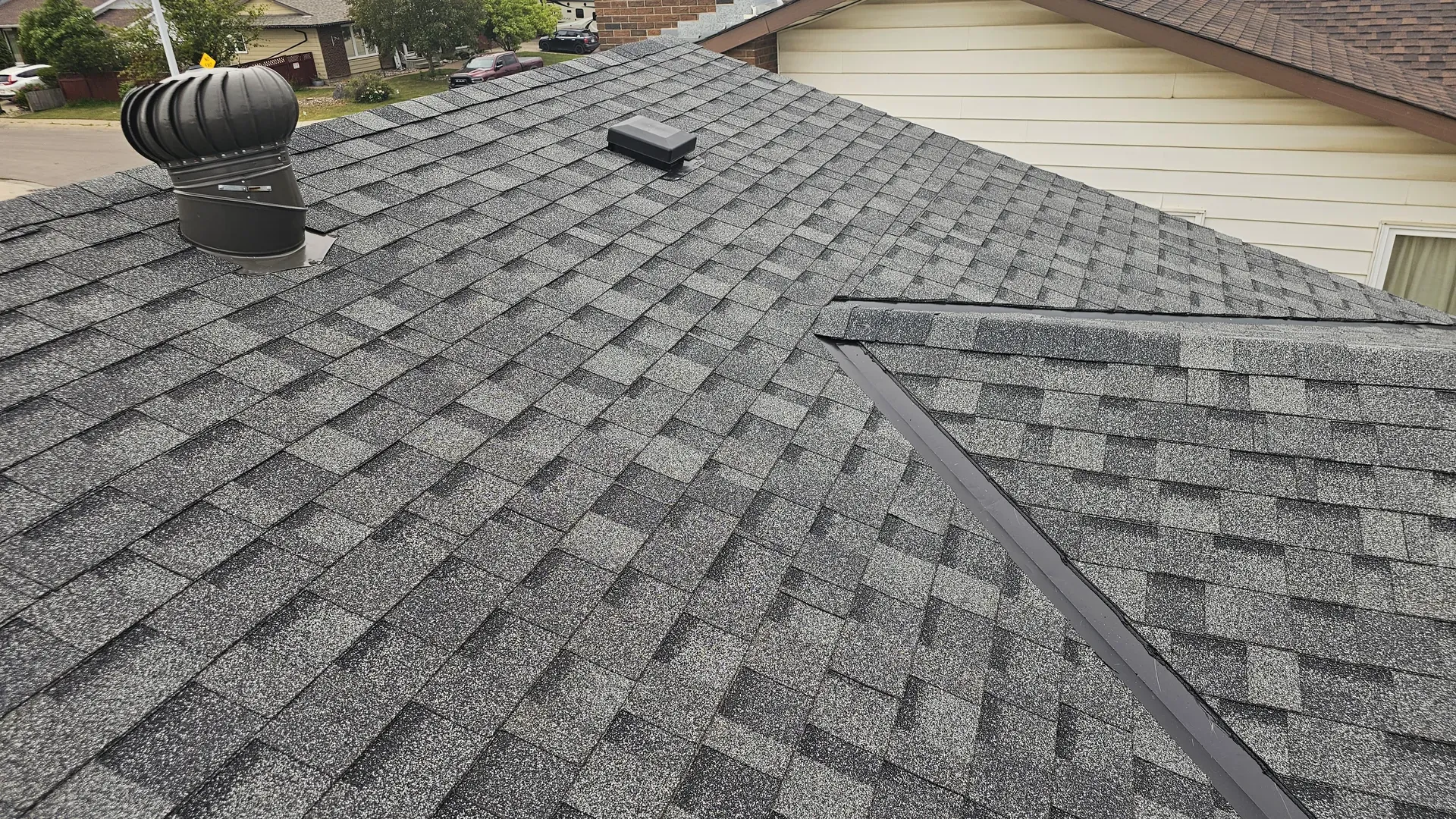
The Best Shingles for Edmonton Weather: IKO, BP, Malarkey and GAF Compared
Wind ratings, impact class and real Edmonton performance for the four shingle brands we install most, plus the parts of the system that matter more than the brand.
Read the guide
The Best Time of Year to Replace a Roof in Edmonton
Season by season, what actually changes for an Edmonton re-roof: pricing, scheduling, shingle sealing temperatures, and whether winter roofing is a real option.
Read the guide