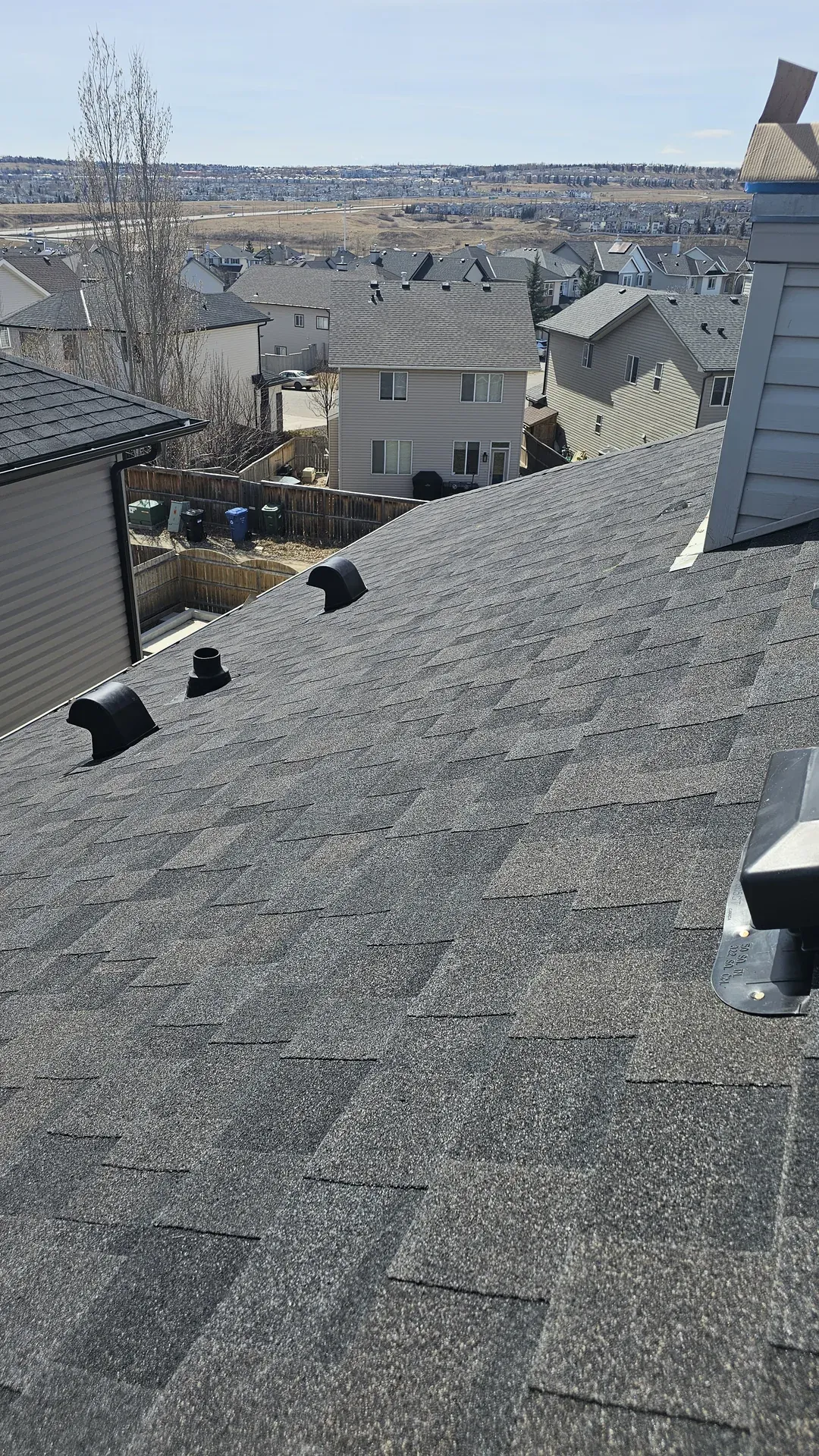
The Best Shingles for Edmonton Weather: IKO, BP, Malarkey and GAF Compared
Wind ratings, impact class and real Edmonton performance for the four shingle brands we install most, plus the parts of the system that matter more than the brand.
Royal Roofing Edmonton
Edmonton roofing & exteriors since 2011
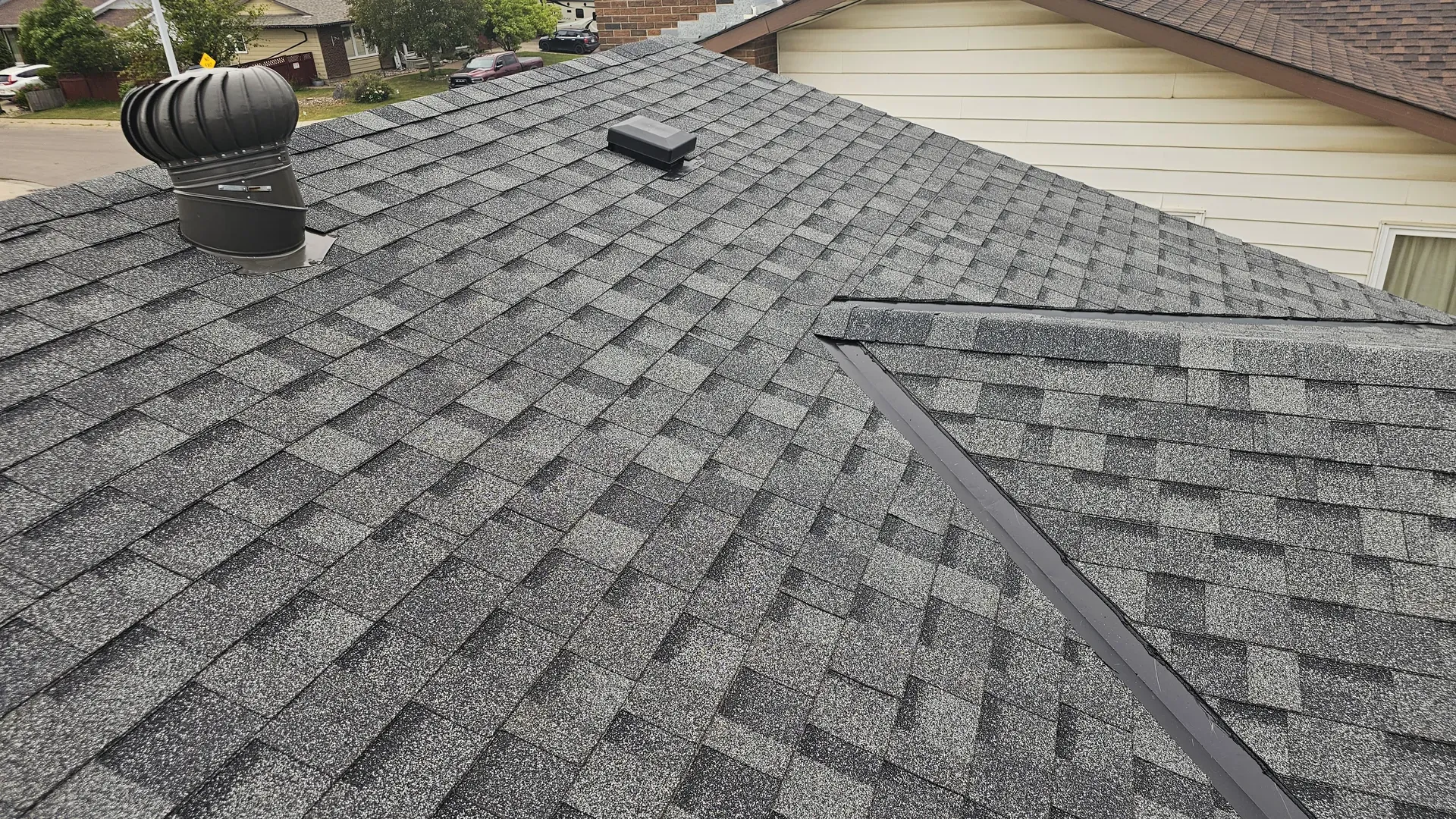
Every shingle sold in Canada is engineered to keep water out. On a mild coastal roof, most of them will do that for twenty five years without complaint. Edmonton is not a mild coastal roof, and up here the differences between products stop being marketing and start being measurable.
This is an honest walk through the four brands we install most, what the specs actually mean, and where we would spend the money.
What Edmonton does to a shingle
Four forces, running at once, for the whole service life.
Ultraviolet radiation. Prairie sun at altitude with long summer days is harder on asphalt than most people assume. UV drives the volatile oils out of the asphalt, and the shingle gets progressively harder and more brittle. The granule layer is the only thing standing between the sun and the mat.
Freeze and thaw. A roof that swings from minus twenty five to plus four and back inside a week works at every sealant line, every nail, and every bond between the shingle layers. Alberta gets this repeatedly through winter and shoulder season, and it is quietly the most destructive thing on this list.
Hail. It is not only a Calgary problem. Edmonton-area storms produced roughly $230 million in insured damage between May and July of 2026 alone. A single hail event can strip enough granules to take five to ten years off a standard shingle.
Wind. Prairie gusts test the seal strip, especially on a roof shingled in cold weather where the strips never fully bonded in the first place.
The two specs that actually matter
Ignore most of the wrapper. Two numbers tell you nearly everything.
Impact resistance (UL 2218). Class 1 through Class 4. The test drops a two-inch steel ball from twenty feet onto the same spot twice; if the mat does not crack, split, or tear on the back side, it passes. Class 4 is the highest available, and it is the only rating Alberta insurers care about. Note that a shingle can be premium, expensive, and heavily marketed while still being Class 3.
Wind rating. Expressed in mph or km/h, and often quoted twice: a standard rating and a higher rating that only applies with a specified nailing pattern and starter/ridge system. The high number is conditional. If it is not installed the specified way, you do not have it.
Everything else, including the word “lifetime” on the packaging, is warranty language, and warranty language is mostly about material defects rather than about how the roof performs in year eighteen.
IKO
Canadian-made, widely stocked in Edmonton, and the range most local roofs are wearing.
Cambridge is the entry architectural shingle. 110 mph (177 km/h) wind rating, Class 3 impact, 15-year iron-clad protection period in Canada. It is a decent, honest shingle and it is what a lot of builder-grade roofs get. On an Edmonton roof it is the minimum we would put on a house we cared about.
Dynasty steps up with the ArmourZone reinforced nailing strip, a 130 mph (210 km/h) wind rating, and a wider colour range. It is a genuinely better shingle than Cambridge and it is our most common mid-tier recommendation. One thing to be clear about: Dynasty is Class 3, not Class 4. It gets sold as an impact-resistant premium product often enough that we make a point of correcting it, because it will not earn you an insurance discount.
Nordic is IKO’s Class 4. Same 130 mph (210 km/h) wind rating and ArmourZone strip as Dynasty, plus genuine UL 2218 Class 4 impact resistance. Fewer colours, because the modified formulation limits the palette. If you want a Class 4 IKO roof, this is the one, and it is the IKO product we recommend most often in hail-exposed parts of the region.
BP (Building Products of Canada)
Also Canadian, made in Quebec, and a strong performer in this climate.
Mystique 42 is their 42-inch laminate. Lifetime limited warranty, 180 km/h standard wind coverage and 220 km/h under high-wind application instructions, suitable for slopes above 4/12 and down to 2/12 with the low-slope method. Good value, good colour range, and the wider 42-inch format speeds up installation.
Vangard 42 IR is the impact-rated version: genuine UL 2218 Class 4, lifetime limited warranty, and the same 180 / 220 km/h wind coverage. The mat is coated both sides with elastomeric modified asphalt, which is what buys the impact rating and also helps in the cold.
BP tends to price slightly under the equivalent IKO product and performs comparably. If the colour you want exists in both lines, it is a reasonable place to save a few hundred dollars.
Malarkey
The premium option, and the one we recommend when a homeowner tells us they are staying in the house.
Legacy is built on NEX polymer-modified asphalt rather than conventional oxidised asphalt. In plain terms, rubber-like polymers are blended into the asphalt so it stays flexible at low temperatures instead of getting glassy. That is precisely the failure mode Edmonton produces. It carries UL 2218 Class 4, a lifetime limited warranty with a 20-year non-prorated period (the longest non-prorated coverage in common use), 110 mph standard and 130 mph enhanced wind ratings, and Class A fire.
Malarkey costs more. On a cold roof it behaves noticeably better, it holds granules better under hail, and the non-prorated warranty period is not marketing, it is a real difference in what you would actually collect if something went wrong in year fifteen.
GAF
The dominant North American brand, and worth knowing about even though it is less common on Edmonton roofs than IKO or BP.
Timberline HDZ uses their LayerLock lamination and a widened nailing zone, and it is sold with the WindProven limited wind warranty, which carries no maximum wind speed when installed with the full GAF accessory system (starter, ridge cap, underlayment, ventilation). That is a genuinely strong warranty position. HDZ itself is not Class 4; GAF’s impact-rated line is separate.
We install GAF on request and it is a good shingle. Where it sometimes loses on an Edmonton job is stock and colour availability compared with the Canadian brands.
3-tab is not worth the savings here
A basic 3-tab roof will save you roughly $2,000 to $4,000 up front against architectural shingles. It will also last about 15 to 20 years in this climate instead of 20 to 25, it takes hail poorly, and it is visually flat next to a laminated shingle.
We will install 3-tab if a homeowner asks, usually on a rental or a garage. On a house you live in, the money saved evaporates the first time you replace the roof five years earlier than you needed to.
What matters more than the brand
Here is the part nobody markets: on the roofs we are called out to repair, the shingle is almost never the reason they failed.
Nailing. Four to six nails per shingle, driven flat, in the manufacturer’s specified nailing zone. High nails miss the lamination and the shingle above does not lock down. Overdriven nails cut through the mat. This single detail accounts for more premature failures than every product difference on this page combined, and it is invisible from the ground the day the job finishes.
Ice and water shield. A self-adhering membrane bonded to the deck at every eave, every valley, and around every penetration, run high enough past the interior wall line to matter. In a climate that produces ice dams annually, this is not optional and it should not appear as an upgrade line on your quote.
Underlayment. High-tear synthetic across the whole deck, not felt on the corners.
New flashings. Step, apron, chimney, and vent boots replaced rather than reused. Reused flashing is the single most common source of a leak on an otherwise good new roof.
Ventilation. Alberta code wants at least 1/300 of insulated ceiling area in net free vent area, split roughly evenly between soffit intake and exhaust. A poorly ventilated attic cooks shingles from below, and every manufacturer’s warranty excludes it. Fixing ventilation is also what solves attic rain.
A Class 4 Malarkey roof installed badly will fail before a Cambridge roof installed properly. Choose the crew before you choose the colour.
A note on colour
Darker shingles absorb more heat, which helps shed snow slightly faster and hurts slightly on shingle temperature in July. In Edmonton the effect is real but small, and it is dwarfed by attic ventilation. Choose the colour you want to look at for twenty five years.
The one practical consideration: mid-tone greys and weathered-wood blends hide granule loss and normal ageing better than very dark blacks or bright colours do.
What these cost in Edmonton
Installed, per square foot of roof area, including tear-off, underlayment, membrane, labour and disposal:
| Shingle grade | Per sq ft installed | Typical Edmonton home |
|---|---|---|
| 3-tab | $3.00 – $5.00 | $7,500 – $12,000 |
| Architectural (Cambridge, Mystique) | $4.50 – $7.00 | $9,000 – $15,000 |
| Class 4 impact-rated (Nordic, Vangard IR, Legacy) | $5.50 – $9.00 | $12,000 – $18,000 |
| Designer / composite | $7.00 – $12.00+ | $15,000 – $25,000 |
The Class 4 premium usually works out to $2,000 to $4,000 over standard architectural. Set against a 15 to 25 percent insurance discount on the dwelling portion of your premium and hail deductibles that now commonly sit at $2,500 to $5,000, it pays back faster than it used to. Our full roof replacement cost guide for Edmonton has the complete breakdown.
What we would actually put on our own house
Staying five years or less, budget-driven: IKO Cambridge or BP Mystique 42. Properly installed, either will see you out.
Staying ten years or more, the sensible default: IKO Nordic or BP Vangard 42 IR. Class 4, insurance discount, real hail protection, modest premium.
Staying for good, or you have taken hail before: Malarkey Legacy. The cold-weather flexibility and the 20-year non-prorated warranty are worth the difference.
Whichever way you go, ask for the shingle by name on the quote. “Architectural shingles” is not a specification. If a quote will not name the product, that is telling you something.
Want a straight recommendation for your specific roof, pitch, and neighbourhood? Book a free estimate and we will get up there, look at what you have, and put the options in writing.
Free Estimate
Want a straight answer on your own roof?
Tell us about your roof and we send you a written quote. No pressure, no scare tactics, and we will tell you when a repair is all you need.
Keep reading
All articles
Attic Rain in Edmonton: Why Your Ceiling Drips in February
Water staining your ceiling after a cold snap breaks is almost never a roof leak. Here is what attic rain is, why Edmonton homes get it, and how to actually fix it.
Read the guide
The Best Time of Year to Replace a Roof in Edmonton
Season by season, what actually changes for an Edmonton re-roof: pricing, scheduling, shingle sealing temperatures, and whether winter roofing is a real option.
Read the guide
How Long Does a Roof Last in Edmonton? (And How to Tell Yours Is Done)
Real service life for asphalt, metal and cedar on Edmonton homes, why the number on the wrapper is not the number you get, and the signs it is time to replace.
Read the guide