Vinyl vs LP SmartSide vs James Hardie: Choosing Siding for an Edmonton Home
How the three main siding materials actually behave through Edmonton winters and hail seasons, what they cost installed, and why what goes behind them matters more.
Royal Roofing Edmonton
Edmonton roofing & exteriors since 2011
Siding gets chosen on a showroom sample board, in good light, at room temperature. Then it goes onto a house that will be at minus 30 in January and plus 30 in July, take hail most summers, and sit in direct prairie UV for the next thirty years.
The gap between how these materials look on the sample and how they behave on an Edmonton wall is the whole point of this article.
What Edmonton actually does to siding
Thermal movement. A 60-degree annual swing makes every material expand and contract, and each one does it differently. Vinyl moves a lot, engineered wood moves moderately, fibre cement barely moves at all. That single property drives most of the installation differences and most of the failures.
Cold-weather brittleness. Some materials get progressively less impact-tolerant as the temperature drops. A wall that shrugs off a stray hockey puck in August can crack from the same hit in February.
Hail. Edmonton-area storms produced roughly $230 million in insured damage between May and July of 2026. Roofs take the worst of it, but west and north walls take real punishment too, and siding damage is a routine part of a hail claim here.
UV. Long summer days at this latitude fade pigments. How well a product holds colour over twenty years is a genuine differentiator, not marketing.
Moisture and freeze-thaw. Wind-driven rain, snow melting against the wall, and vapour trying to move outward through the assembly all winter. Whatever gets behind the cladding needs a way back out.
Vinyl
Still the most common siding in the Edmonton region, and there are decent reasons for that.
What it does well: it is the cheapest option by a clear margin, it never needs painting, colour goes all the way through so scratches do not show a different substrate underneath, it is light and fast to install, and it is completely unbothered by moisture. On a rental, a garage, a flip, or a tight budget, it is a rational choice.
Where Edmonton finds its limits:
- It gets brittle in deep cold. Below about minus 20, vinyl loses impact tolerance significantly. Winter hail and stray impacts crack it, and a cracked panel usually has to be replaced rather than repaired.
- It moves. A 12-foot panel can change length by more than a centimetre across our temperature range, which is why vinyl must be hung, not nailed tight, with the fasteners centred in the slots and left slightly loose. Installed tight, it buckles in July and pulls at the nails in January. This is the single most common vinyl installation failure we see.
- Dark colours fade and are more prone to heat distortion. Mid-tones hold up much better here.
- It reads as builder-grade on a house where the rest of the exterior does not.
Where we recommend it: budget-sensitive projects, rentals, garages and outbuildings, and homes where the siding is one element among stone or another feature material rather than the whole envelope.
LP SmartSide
Engineered wood: wood strands bonded with resins, treated with a zinc borate compound for rot and termite resistance, then coated. It is our most-recommended middle option in this climate, and the recommendation is climate-specific.
What it does well:
- Impact resistance in the cold. This is the headline for Edmonton. Engineered wood does not get brittle the way vinyl does, and it takes hail and everyday knocks far better in February.
- It looks like wood, because it substantially is. Deeper texture, real shadow lines, and it takes trim details properly.
- It comes in long lengths (up to 16 feet), which means fewer seams across a wall.
- It is repairable and repaintable. A damaged section can be replaced and painted to match rather than requiring a colour-matched panel that may be discontinued.
- Lighter and easier to work than fibre cement, which keeps labour cost down.
Where it needs care: it is a wood product, so every cut end must be sealed, and the bottom edge needs proper clearance and flashing. Installed carelessly at the ground line or around windows, moisture gets into the substrate. It also needs repainting eventually, typically somewhere in the 10 to 15 year range depending on exposure and colour.
Where we recommend it: most Edmonton homes, most of the time. It is the best balance of appearance, cold-weather durability, and cost that we install.
James Hardie
Fibre cement: portland cement, sand, cellulose fibre and water. The premium option, and it earns the price in specific ways.
What it does well:
- Essentially inert. Does not rot, does not burn, does not interest insects, and does not care about UV.
- Superb dimensional stability. It barely moves through our temperature swings, which means tighter joints that stay tight.
- Excellent impact resistance, including in the cold. On a hail-exposed elevation it is the toughest thing on this list.
- ColorPlus factory finish is baked on rather than field-applied and holds colour dramatically better than site painting. Repaint intervals stretch well past what a wood product needs.
- HardieZone products are specified for climate. The HZ5 formulation is engineered for regions with freezing and thawing, which is the relevant one here. Worth confirming that is what you are being quoted.
The tradeoffs:
- Cost. Both material and labour. It is heavy, it needs specific tools and cutting practices, and it takes longer to install.
- Weight. Around 2.5 times heavier than engineered wood, which matters on some older walls and adds to the labour figure.
- Silica dust when cut, which requires proper practice on site.
- Less forgiving of a bad install. Butt joints need flashing behind them, fastener placement is specified precisely, and clearances at grade, roof lines and decks are not suggestions.
Where we recommend it: homes the owners intend to keep, higher-value properties where the exterior needs to look right for decades, and elevations that take the worst weather.
Cedar and the rest
Real cedar remains beautiful and remains the highest-maintenance option available, needing staining or oiling every three to five years in this climate to avoid greying and checking. On a feature gable or an entry surround it is lovely. On a whole house in Edmonton, most people underestimate what they are signing up for.
Steel and aluminium siding show up occasionally, mostly on modern builds. Excellent longevity, but denting from hail is a real consideration and colour matching a replacement panel years later can be difficult.
What is behind the siding matters more than the siding
This is where jobs are actually won and lost, and it is the part that is invisible the day the work finishes.
Water-resistive barrier. A proper house wrap, lapped shingle-style so water runs down and out rather than into the laps, and taped correctly at seams and penetrations.
Flashing. Head flashing above every window and door, sill pans below, kick-out flashing where a roof edge meets a wall. That last one is small, cheap, and the most commonly omitted piece of metal in residential construction. Without it, roof runoff is directed straight into the wall assembly at the exact point where nobody can see it, and the resulting rot is usually discovered years later during a re-side.
Drainage and drying. A rainscreen gap, created with furring strips, gives any water that gets behind the cladding somewhere to drain and lets the assembly dry outward. On the wind-driven-rain elevations of an Edmonton home this is worth doing regardless of material.
Clearances. Siding held up off grade, off the roof deck, and off horizontal surfaces so it is not wicking water.
A vinyl wall built correctly over a proper drainage plane will outperform a Hardie wall built badly, every time. When you compare quotes, compare what happens behind the cladding, not just the brand on the front.
What it costs in Edmonton
Installed, including tear-off of the existing cladding, house wrap, trim and flashing:
| Material | Per sq ft installed | Typical full re-side |
|---|---|---|
| Vinyl | $5 – $10 | $12,000 – $22,000 |
| LP SmartSide | $9 – $15 | $20,000 – $34,000 |
| James Hardie | $10 – $18 | $24,000 – $45,000 |
| Cedar | $15 – $25 | $32,000 – $60,000 |
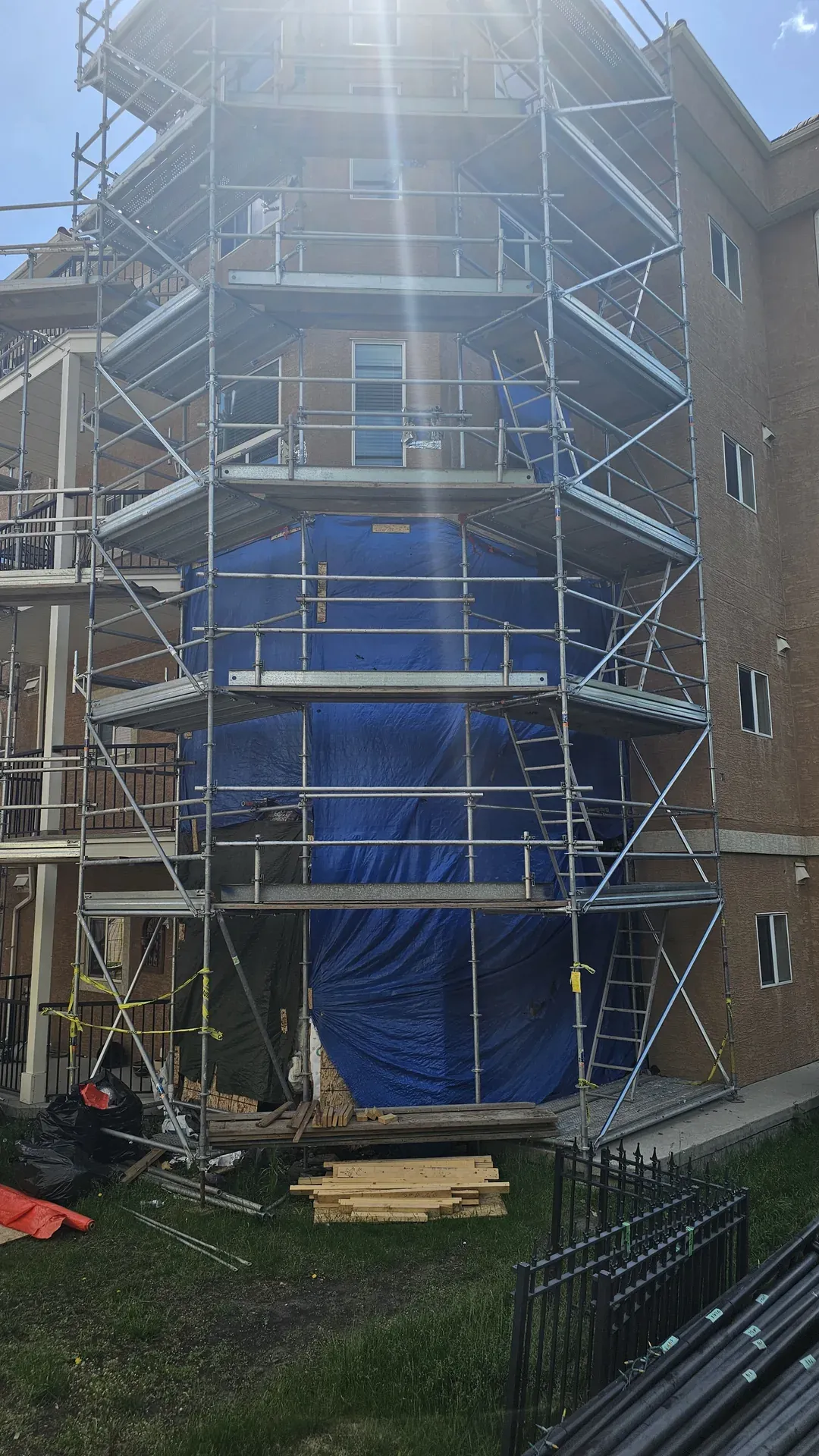
Ranges assume roughly 2,000 to 3,000 square feet of wall area. What moves you within a range: the number of storeys and how much scaffolding is needed, window and door count (every opening is trim and flashing work), gables and dormers, whether the sheathing beneath is sound, and how much rot is found once the old cladding is off.
One practical note: if the soffit, fascia or eavestrough are tired, do them during the siding project. The access equipment is already up and the incremental cost is far lower than a separate mobilisation later.
So which one?
Choose vinyl if budget is the binding constraint, or it is a rental, garage or secondary structure. Insist on correct hanging with slotted fasteners left loose, and avoid very dark colours.
Choose LP SmartSide if you want the best all-round result for the money on an Edmonton house. Real wood texture, genuinely better cold-weather impact resistance than vinyl, repairable, and a mid-range price. This is what we specify most often.
Choose James Hardie if you are staying in the home long-term, the elevation takes hard weather, or you want the exterior to look right in twenty five years without a repaint cycle. Confirm you are getting the HZ5 climate formulation and factory ColorPlus finish.
Whichever you choose, get the house wrap, the flashing, and the kick-out details written into the quote by name. If a siding quote is one line and a number, you cannot compare it to anything.
Thinking about a re-side? Book a free estimate and we will walk the whole exterior with you, show you where the current assembly is failing, and put real options in writing. We work across Edmonton, St. Albert, Sherwood Park and the surrounding communities.
Free Estimate
Want a straight answer on your own roof?
Tell us about your roof and we send you a written quote. No pressure, no scare tactics, and we will tell you when a repair is all you need.
Keep reading
All articles
Attic Rain in Edmonton: Why Your Ceiling Drips in February
Water staining your ceiling after a cold snap breaks is almost never a roof leak. Here is what attic rain is, why Edmonton homes get it, and how to actually fix it.
Read the guide
The Best Shingles for Edmonton Weather: IKO, BP, Malarkey and GAF Compared
Wind ratings, impact class and real Edmonton performance for the four shingle brands we install most, plus the parts of the system that matter more than the brand.
Read the guide
The Best Time of Year to Replace a Roof in Edmonton
Season by season, what actually changes for an Edmonton re-roof: pricing, scheduling, shingle sealing temperatures, and whether winter roofing is a real option.
Read the guide